


Thanksgiving is right around the corner, and while everyone else might be looking forward to turkey, family gatherings, and a few days off, you might be thinking about everything that needs to happen before then. If you're wondering how to handle the mental load, start by making responsibilities visible, sharing ownership of tasks, having regular planning check-ins, asking directly for support, lowering unrealistic expectations, and making room for rest.
Who's bringing what to dinner? Did you RSVP to the school Thanksgiving event? Do the kids have clothes that fit for family photos? When are you going grocery shopping? What about the teacher gifts, holiday travel plans, and that appointment you still need to schedule before the end of the year?
And that's on top of the lunches, laundry, homework, bedtime routines, and everyday responsibilities that don't magically disappear during the holidays. For parents—especially moms and other caregivers who often end up tracking everyone's needs—this invisible planning work is a big reason you can feel exhausted even when you're doing everything "right."
If you're feeling exhausted before the holiday season has even begun, there's a good chance you're experiencing the mental load of parenting. At Creekside Counseling in Eden Prairie, Minnesota, we work with parents who feel overwhelmed, stretched thin, and frustrated that they're doing everything they can but still can't seem to catch up.
The problem isn't necessarily that you're doing something wrong. It may be that you're carrying more responsibility than one person can reasonably manage. Below, we'll break down what the mental load is, why it hits harder during the holidays, who typically carries it, signs you're overloaded, the kinds of tasks that make it up, practical ways to manage it, how to explain it to a partner, and when therapy support may help.
What Is the Mental Load of Parenting?
The mental load refers to the ongoing cognitive and emotional work involved in managing a household, raising children, and keeping family life running smoothly.
It's not just completing tasks. It's remembering what needs to be done, anticipating future needs, making decisions, coordinating schedules, and ensuring nothing falls through the cracks.
For example, packing your child's lunch is a physical task. But the mental load might include:
Remembering which groceries you're running low on
Planning lunches for the week
Keeping track of food allergies or school restrictions
Noticing when your child needs a new lunchbox
Remembering which days your child buys lunch at school
Making sure everything is ready before the morning rush
One task can involve several invisible steps, and someone has to keep track of all of them.
This is why you can spend an entire day feeling busy and exhausted without being able to point to everything you accomplished.
Why the Mental Load Is Different From a To-Do List
A to-do list contains tasks you can check off, but the mental load includes the ongoing mental workload behind deciding what belongs there.
The mental load is the responsibility of knowing what belongs on that list in the first place—the invisible mental work and cognitive tasks involved in keeping life on track.
It's the constant background thinking:
Did I remember everything? What am I forgetting? What needs to happen next?
Even when you're relaxing, part of your brain may still be planning tomorrow's schedule, anticipating a child's needs, or mentally reviewing everything from appointments to the family's schedule that needs your attention.
Over time, that constant responsibility can contribute to stress, irritability, difficulty concentrating, and emotional exhaustion.
Why the Holidays Make the Mental Load Even Heavier
The holidays can be wonderful, but they also introduce an entirely new layer of expectations and responsibilities.
Between Thanksgiving and the end of the year, parents may find themselves coordinating family gatherings, school celebrations, gifts, travel, childcare, meals, and traditions.
And while these activities are often intended to bring joy, organizing them can feel like a second job.
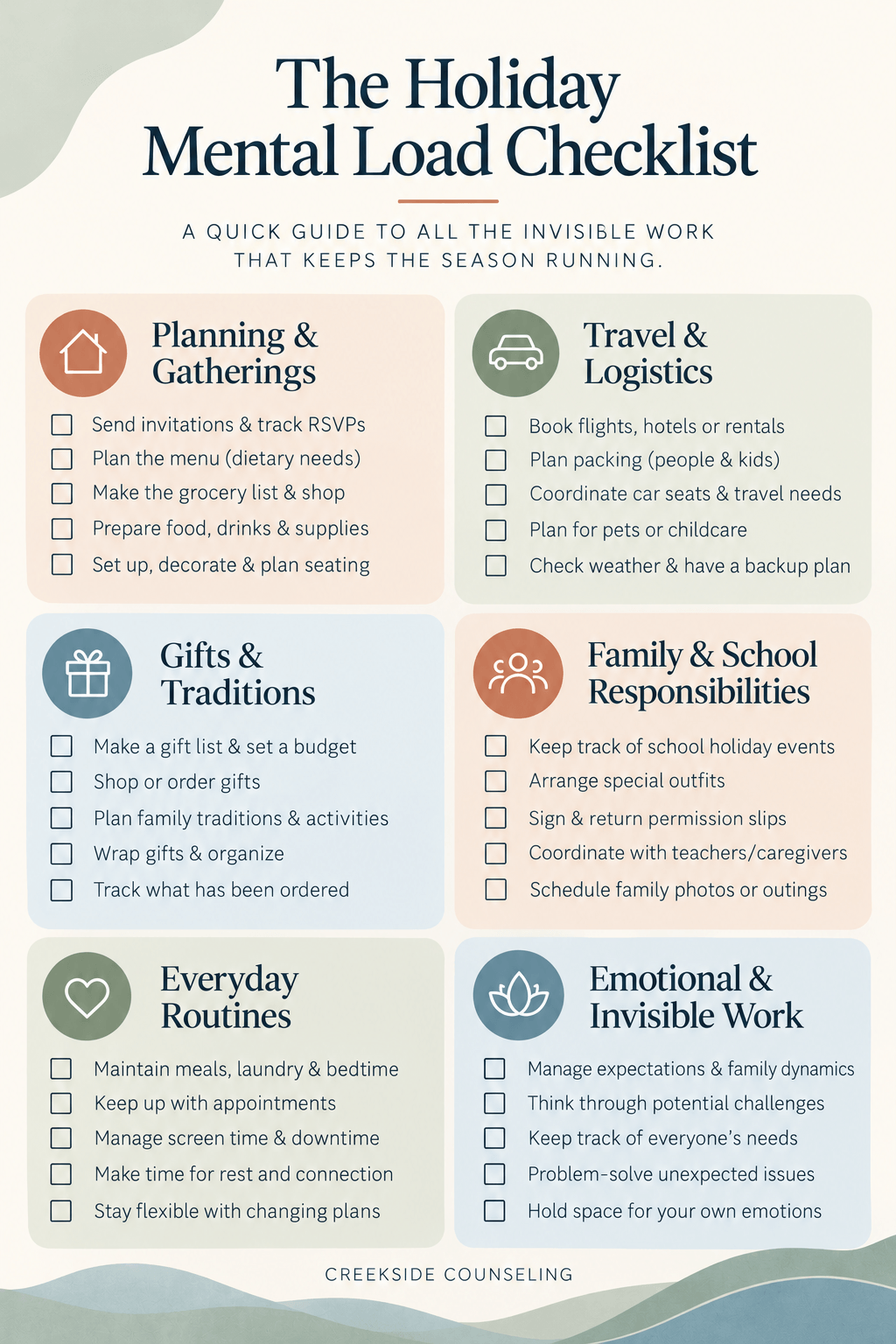
The Invisible Work Behind Holiday Traditions
Think about something as simple as hosting Thanksgiving dinner.
The visible work might include cooking the turkey, setting the table, and cleaning up afterward.
But behind the scenes, someone may also be:
Coordinating invitations and RSVPs for family events
Planning a menu around everyone's preferences
Checking for dietary restrictions
Thinking ahead about holiday meals
Creating a grocery list and shopping schedule
Figuring out where guests will sleep
Planning activities for the children
Remembering family traditions
Planning holiday gifts
Navigating complicated family dynamics
Making sure everyone feels included
Managing the budget
And once Thanksgiving is over, the planning for the next holiday often begins.
The stress around holidays isn't always about how much you're doing. Sometimes it's about how much you're responsible for remembering.
The Pressure to Make the Holidays Magical
Parents often feel pressure to create meaningful childhood memories.
You want your children to experience the excitement of holiday traditions, spend time with extended family, and feel loved and connected.
But when every tradition becomes another obligation, even the enjoyable parts of the season can start to feel overwhelming.
You might find yourself thinking, I should be enjoying this. Why am I so stressed?
The answer may be that you're trying to participate in the holiday while also managing every detail that makes it happen.
Why Mothers Often Carry More of the Mental Load (But Aren't the Only Ones)
Although the mental load can affect anyone, mothers frequently take on a disproportionate share of the planning, organizing, and emotional labor involved in family life. A 2024 study found mothers manage 71% of household cognitive labor, an imbalance linked to higher burnout risk.
Even in households where both parents work and share physical tasks, one partner may still be responsible for noticing what needs to happen and making sure it gets done. Fathers often believe responsibilities are shared equally, despite evidence to the contrary.
For example, one parent might say, "Just tell me what you need help with."
While that offer may be well-intentioned, it still leaves the other parent responsible for identifying the task, explaining it, delegating it, and checking whether it was completed.
That's not truly sharing the mental load. It's sharing the execution while leaving the management to one person.
However, these patterns aren't universal. Fathers, single parents, same-sex couples, grandparents, and other caregivers can experience the same exhaustion.
The important question isn't which parent should be responsible.
It's whether the responsibilities of family life are being recognized, communicated, and shared in a way that feels manageable. Research also shows fathers handle only 37% of daily household tasks, while women perform 79% of daily jobs like cleaning and childcare coordination.
Signs You're Carrying Too Much of the Mental Load
Mental load doesn't always look like obvious stress.
Sometimes it shows up as frustration, resentment, or feeling like you can't fully relax.
Many parents feel this kind of strain, and one study found 48% report overwhelming stress related to mental load.
You might notice:
Feeling mentally exhausted even after a relatively quiet day
Constantly thinking about what needs to happen next
Feeling irritated when someone asks what they can do to help
Struggling to relax because there is always something unfinished
Feeling responsible for everyone's schedules, emotions, and needs
Becoming overwhelmed by seemingly small decisions
Feeling resentful toward your partner or family members
Having difficulty falling asleep because your mind won't stop planning
Feeling guilty when you take time for yourself
Women spend about 21 hours weekly on unpaid household management.
These experiences don't automatically mean you're experiencing burnout or a mental health condition. But they can be signs that your current responsibilities and expectations need attention.
A Mental Load Checklist: What Are You Actually Managing?
One of the first steps in understanding the mental load is making the invisible work visible. This checklist can also work as a task list to help surface that hidden work.
Recording everything affecting your mental load can help organize your thoughts and show what you’re really carrying.
Below is a list of mental load tasks that captures all the tasks parents commonly manage. As you read through it, consider not only who completes each task, but who remembers, plans, and coordinates it.
Everyday Parenting Responsibilities
Scheduling pediatrician, dentist, and other appointments
Tracking school calendars, permission slips, deadlines, and parent-teacher conferences
Remembering extracurricular activities and transportation
Handling meal planning and monitoring groceries
Keeping track of clothing sizes and seasonal needs
Coordinating childcare, sick days, and backup plans
Managing bedtime and morning routines
Remembering birthdays, important dates, gifts, and special events for children's friends
Monitoring children's emotional and developmental needs
Communicating with teachers, coaches, caregivers, and other parents
Household Responsibilities
Tracking household bills, subscriptions, and household expenses while keeping the family budget up to date
Scheduling repairs and maintenance, including researching household purchases or replacements
Keeping inventory of household essentials, household items, and household needs
Planning cleaning and laundry routines, including personal care supplies
Coordinating family schedules
Managing paperwork, insurance, appointments, financial documents, insurance claims, tuition payments, and major purchases
Holiday-Specific Responsibilities
Planning Thanksgiving meals, holiday meals, and family gatherings
Coordinating travel and accommodations
Organizing holiday gifts, shopping lists, and budgets
Remembering school holiday events
Planning family photos and holiday cards
Managing traditions, family events, and important dates
Navigating expectations from extended family and thank you notes
Coordinating childcare during school breaks
A helpful exercise: Sit down with your partner or another support person and review this checklist together.
For each category, ask:
Who notices when something needs to be done?
Who makes the decisions and plans?
Who actually completes the task?
Who follows up to make sure it happened?
You may discover that the physical work is relatively balanced while the mental responsibility is not.
How to Handle the Mental Load of Parenting: 6 Practical Strategies
You don't need a more complicated productivity system or another list of things to accomplish.
Instead, focus on making responsibilities more visible, sharing ownership, and reducing unnecessary expectations.
1. Share Ownership, Not Just Individual Tasks
There's a difference between assigning individual tasks and sharing ownership of broader household tasks like grocery shopping.
When one person owns a responsibility, they're also responsible for planning, remembering, and following through.
For example, if your partner takes ownership of Thanksgiving groceries, that might include reviewing the menu, making the grocery list, checking what's already in the pantry, identifying household needs, and purchasing everything needed.
That kind of ownership includes the mental work without relying on one partner to act as the project manager.
You shouldn't have to manage the process from beginning to end.
Start by identifying two or three recurring responsibilities that can be fully transferred rather than delegated one task at a time.
2. Have a Weekly Family Planning Check-In
Instead of trying to coordinate everything through scattered conversations and last-minute reminders, schedule a short weekly planning meeting.
Spend 10–15 minutes reviewing:
Upcoming appointments and activities
Meals, meal planning, and grocery needs
School deadlines and parent-teacher conferences
Household responsibilities
Holiday plans, family events, holiday gifts, and holiday meals
The shared family calendar
Areas where either parent needs additional support or backup plans for sick days
Keep a shared calendar or planning system that both partners can access and update, along with a task list that covers all the tasks, from a grocery list and household bills to the family budget.
The goal isn't to create another meeting for one person to manage. It's to build a shared understanding of what needs to happen and help both partners see upcoming important dates and changes to the family's schedule.
3. Lower the Expectations Around Holiday Traditions
Not every tradition needs to happen every year.
Perfectionism can increase a heavy mental load and raise the risk of burnout.
Ask your family which holiday activities genuinely matter to them.
You may discover that your children care far more about decorating cookies together than attending five different holiday events.
Consider choosing two or three meaningful traditions and letting the rest be optional.
A simpler holiday season isn't necessarily a less meaningful one.
4. Practice Asking for What You Need Without Apologizing
When you're overwhelmed, it's easy to assume your partner should automatically recognize what needs to be done.
Sometimes they do. Sometimes they don't.
Rather than waiting until frustration builds, communicate your needs directly.
Instead of:
"I have to do everything around here."
Try:
"I'm feeling overwhelmed by all the holiday planning. I need us to divide up the responsibilities so I'm not the only one keeping track of everything."
This doesn't mean you should have to repeatedly explain or delegate every task. The goal is to start a conversation that leads to shared responsibility.
5. Make Room for Rest That Doesn't Require More Planning
Sometimes even taking a break creates additional work.
You might arrange childcare, prepare meals in advance, or spend the entire time thinking about what needs to happen when you return.
Simple self care, like extra rest or a short walk, can help reduce stress from a heavy mental load before it turns into bigger health issues or ongoing mental workload.
Try building small, predictable periods of rest into your family's routine.
This might mean one parent handles the entire bedtime routine twice a week, or each partner has a designated block of uninterrupted personal time.
Rest shouldn't always require elaborate coordination or create extra work for the person who needs it.
6. Recognize When Good Enough Is Actually Enough
Mental load often becomes heavier when paired with perfectionism.
You might feel pressure to create homemade holiday treats, volunteer for every school event, maintain a spotless home, and keep everyone happy.
But your family's well-being doesn't depend on everything being done perfectly.
Before adding something to your list, ask:
Is this necessary? Is it meaningful? Or am I doing it because I feel like I should?
Sometimes reducing the mental load means deciding that something simply doesn't need to happen.
How to Explain the Mental Load to Your Husband or Partner
If you've ever searched for how to explain the mental load to your husband, you're probably looking for a way to describe something that feels obvious to you but difficult to put into words.
Start by focusing on the experience rather than assigning blame.
You might say:
"I appreciate everything you do for our family. But I'm realizing that I'm carrying a lot of the responsibility for remembering, planning, and organizing our lives. Even when we're both doing chores, I'm often the one thinking about what needs to happen next. I'd like us to figure out how to share that responsibility more evenly."
It can also help to use a specific example.
Instead of saying, "You never help with school stuff," explain what managing school responsibilities actually involves: checking emails, remembering deadlines, scheduling parent-teacher conferences, organizing supplies, and coordinating transportation.
Then talk about what shared ownership could look like.
For example, one partner might take complete responsibility for school communications or the family calendar, while the other manages medical appointments.
The goal isn't necessarily a perfect 50/50 split of every task. It's a system where both partners understand the responsibilities involved and feel supported.
And if you're the partner who hasn't been carrying as much of the mental load, one of the most helpful things you can do is take initiative without waiting to be asked. Look for needed information or household items yourself before asking your partner.
When the Mental Load Starts Affecting Your Mental Health
Feeling overwhelmed during a busy season is common. But when stress becomes constant, it can begin affecting your emotional well-being and relationships. Managing it matters not just for mental health, but also for preventing burnout and chronic stress.
You may notice increased anxiety, irritability, difficulty sleeping, resentment, or a sense that you're never doing enough. A heavy mental load can contribute to ongoing stress and, over time, physical health issues.
Some parents also experience guilt for feeling frustrated or exhausted, especially when they love their children and appreciate their family life.
But loving your family and feeling overwhelmed by the responsibilities of parenting can both be true.
Therapy can provide a space to explore these feelings, identify unrealistic expectations, improve communication, and develop healthier boundaries and self care.
For couples, therapy can also help partners recognize patterns of unequal responsibility and work toward more collaborative ways of managing family life.
You don't have to wait until you're completely burned out to ask for support.
Parenting Support and Therapy in Eden Prairie, Minnesota
At Creekside Counseling, we know that parenting can be both deeply rewarding and emotionally exhausting.
Whether you're navigating the mental load of parenting, struggling with holiday stress, or feeling disconnected from your partner, our therapists can help you explore what's contributing to your overwhelm and find more sustainable ways to manage it.
We offer compassionate therapy and parenting support in Eden Prairie, Minnesota, serving families throughout the Twin Cities, including Chanhassen, Minnetonka, Edina, and Chaska.
This holiday season, remember that creating a meaningful experience for your family doesn't require doing everything yourself.
You deserve to enjoy the holidays, too.
Frequently Asked Questions About the Mental Load of Parenting
What is the mental load of parenting?
The mental load of parenting is the invisible work of remembering, planning, organizing, and anticipating everything your family needs. It goes beyond completing household chores and includes managing schedules, coordinating appointments, tracking responsibilities, and thinking ahead. This constant mental work can leave parents feeling exhausted even when they aren't physically busy.
Why do moms often carry more of the mental load?
In many families, mothers take on more of the planning, organizing, and emotional responsibilities involved in raising children, even when both parents share household chores. These patterns can develop through social expectations, established family roles, and habits that go unrecognized. However, fathers and other caregivers can experience a heavy mental load, too.
How do I explain the mental load to my husband or partner?
Start by explaining the difference between completing a task and being responsible for making sure it happens. For example, grocery shopping involves more than going to the store. Someone also has to plan meals, check what's needed, and create the list. Sharing specific examples and discussing who can take full ownership of certain responsibilities can help make the invisible work more understandable.
How can I reduce the mental load during the holidays?
Start by identifying which holiday traditions and responsibilities are most meaningful to your family. Simplify or eliminate activities that create unnecessary stress, divide planning responsibilities with your partner or support system, and use a shared calendar to keep track of upcoming events. Remember that you don't have to do everything to create a memorable holiday season.
What's the difference between mental load and parental burnout?
The mental load refers to the ongoing responsibility of managing family life, while parental burnout involves prolonged physical and emotional exhaustion related to parenting demands. A consistently heavy mental load can contribute to burnout, especially when parents have limited support or opportunities to rest. If you're experiencing persistent exhaustion, irritability, or emotional detachment, additional support may be helpful.
Can therapy help with the mental load of parenting?
Yes. Therapy can help parents recognize sources of stress, establish healthier boundaries, manage feelings of guilt or resentment, and develop more sustainable expectations. Individual therapy can support your emotional well-being, while couples therapy may help partners improve communication and share family responsibilities more effectively.

About the Author
Elisabeth Emmerich, MSW, LICSW, is the owner and founder of Creekside Counseling, where she helps children, parents, and adults build healthier relationships with themselves and those they love. As a mom of three, she understands firsthand the challenges of balancing family life, mental health, and the pressures of everyday life, bringing both professional expertise and personal understanding to her work.