

Why Your Child Listens at School but Melts Down at Home
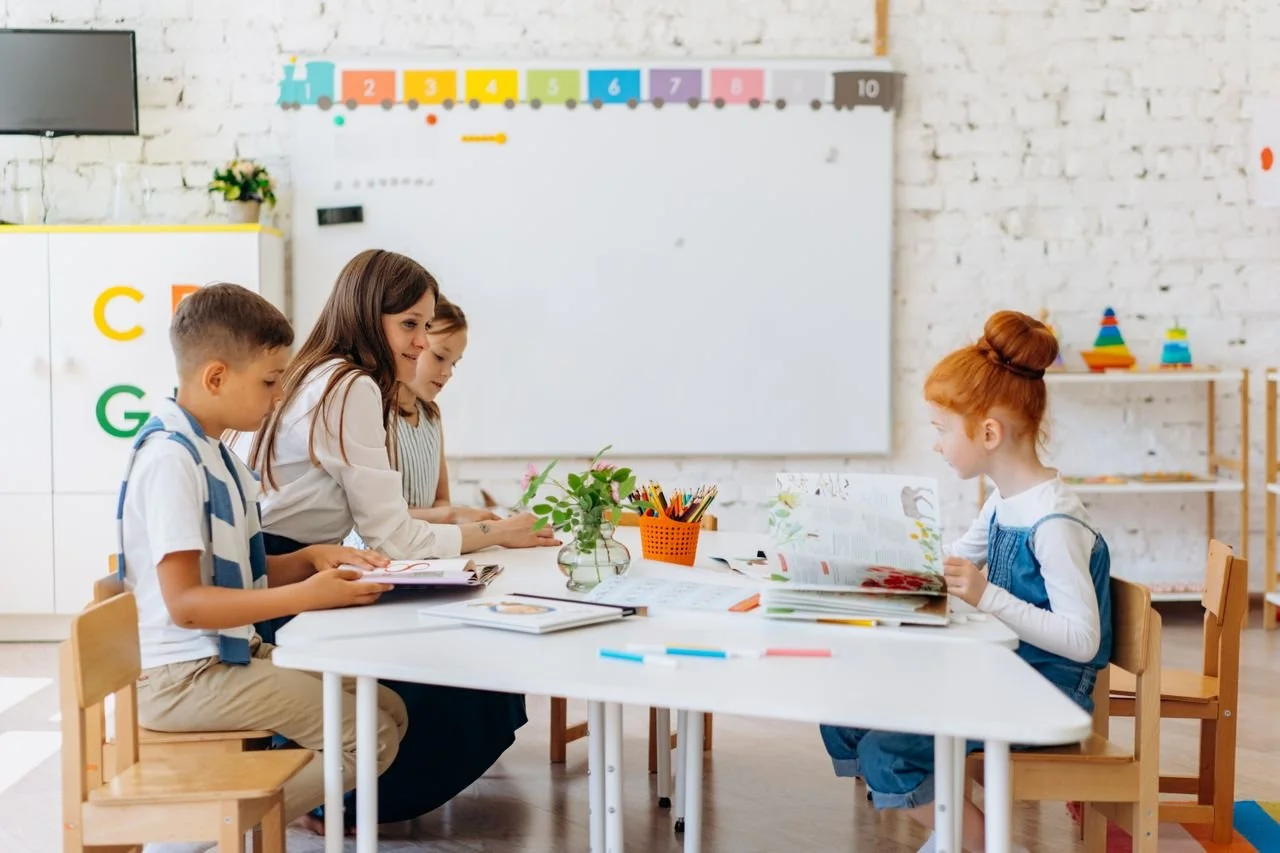
Children may behave better at home than at school because home is the place where children feel safe enough to release the stress and restraint they have been holding in all day.
If you have ever wondered why your child listens at school but melts down at home, you are not alone. Many parents hear that their child shows good behavior at school, follows directions, uses good manners, and participates appropriately—only to come home and unravel over homework, dinner, sibling conflict, or a seemingly small request.
It can feel confusing and even discouraging. You may ask yourself, “Why are kids different at home and at school?” or wonder whether your child is choosing to behave better for teachers than for you.
As child therapists, we often reassure parents that these kids’ behavior differences are not usually a sign that a child is being manipulative or disrespectful. More often, home is the place where children finally feel safe enough to release the stress, effort, and emotional energy they have been holding in all day.
In this article, we will explain why children may maintain good behavior at school but struggle at home, how school demands affect social and emotional development, and what parents can do to make the after-school transition feel calmer and more connected.
Why Is a Child's Behavior Different at Home and at School?
School and home ask very different things of a child.
At school, children are surrounded by clear routines, predictable expectations, structured transitions, and constant adult guidance. They know when to sit, when to move, when to eat, and what happens next. Many children work hard to follow those expectations because they want to do well, avoid getting in trouble, or fit in socially.
At home, the structure loosens. The child may be tired, hungry, overstimulated, or emotionally depleted. Home is also where they feel safest, so it may be the first place they allow themselves to stop holding everything together.
This is why a child who uses good manners at school may become irritable with siblings, refuse simple requests, or fall apart when asked to put away their backpack. The behavior at home is not necessarily the opposite of their school behavior. It may be the result of the effort required to sustain that school behavior all day.
The Hidden Work Behind Good Behavior at School
Good behavior at school often requires more energy than adults realize.
Throughout the day, children may be working to:
Follow multi-step directions
Wait their turn using self-control
Manage frustration with self regulation skills
Ignore distractions
Read social cues
Shift between activities
Keep their bodies still
Ask for help appropriately
Handle mistakes or correction
Navigate friendships
These are all social and emotional skills, and they are still developing throughout childhood. A child may appear calm and cooperative while using a tremendous amount of effort to manage impulses, anxiety, sensory input, and social expectations, which can be even harder for children with social difficulties or other behavioral challenges.
For children with Attention Deficit Hyperactivity Disorder (ADHD), anxiety, autism, sensory sensitivities, learning differences, or a trauma history, that effort can be especially intense. By the time they arrive home, their emotional resources may be nearly gone.
After-School Restraint Collapse
Some parents hear this pattern described as “after-school restraint collapse.” It is not a formal diagnosis, but it is a helpful way to explain what happens when a child spends the day regulating their behavior and then releases everything once they are home.
The meltdown may happen immediately after school, or it may appear later during homework, dinner, bath time, or bedtime. Common signs include irritability, crying, yelling, arguing, refusing directions, aggression toward siblings, or becoming unusually clingy.
The trigger often looks small, but the child’s reaction is connected to the entire day—not just the moment in front of you.
A parent may see a meltdown over the wrong snack. The child may be responding to a noisy classroom, a difficult math lesson, an awkward interaction with a friend, several transitions, and hours of trying to meet expectations, so the child's behavior reflects accumulated demands rather than that one small trigger.
Social and Emotional Learning Requires Practice
Schools increasingly emphasize social and emotional learning as an integral part of development at school, including five core competencies: self-awareness, self-management, social awareness, relationship skills, and responsible decision making. These lessons are important, but children do not master them simply because they understand them intellectually. Relationship skills help children build healthy relationships through communication and conflict resolution.
Social and emotional development happens gradually through repeated practice, support, and co-regulation with caring adults, and positive emotional growth also supports lifelong learning and mental health.
A child may know they are supposed to use a calm voice and still be unable to do so when exhausted. They may understand how to handle disappointment but lose access to that skill when their nervous system becomes overwhelmed.
This is one reason parents may see a gap between what a child can do at school and what they can manage at home. Skills are often inconsistent before they become reliable.
Why Home Feels Safe Enough to Fall Apart
It may not feel flattering when your child saves their hardest behavior for you, but in many cases, it reflects trust.
Children often release big emotions with the person they believe will continue loving and caring for them, even when they are struggling. Home is where they do not have to perform, impress, or hold everything in.
That does not mean parents should accept unsafe or disrespectful behavior without limits. It means the behavior can be addressed with both boundaries and compassion.
You can hold the limit—“I will not let you hit”—while also recognizing the message underneath it: “You have held a lot together today, and now your body is overwhelmed.”
How to Make the After-School Transition Easier
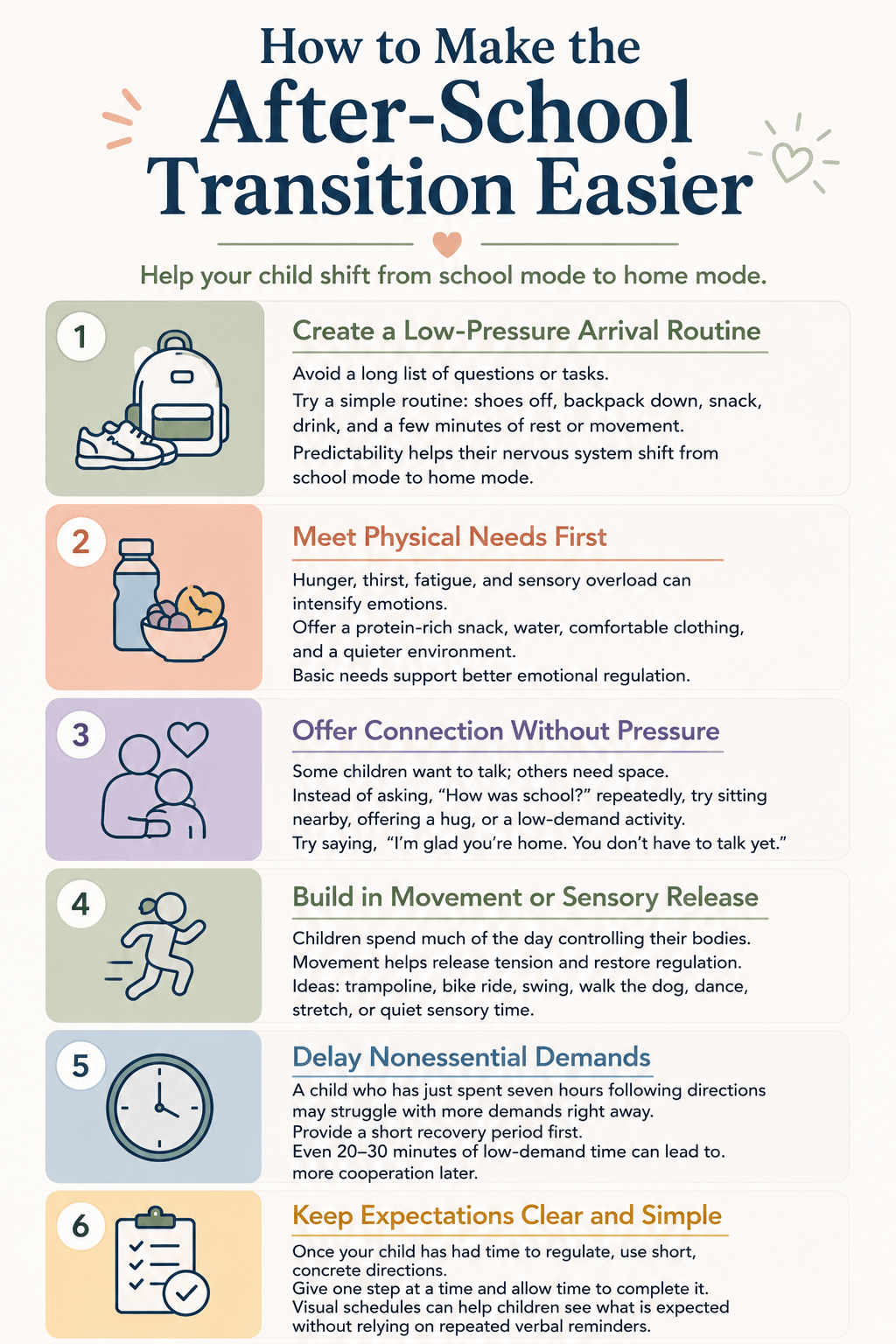
The goal is not to prevent every meltdown. Instead, focus on reducing unnecessary demands and helping your child recover from the school day before expecting more from them.
Create a Low-Pressure Arrival Routine
Avoid greeting your child with a long list of questions or tasks. Some children need quiet before they can talk about their day.
Try offering a simple routine: shoes off, backpack down, snack, drink, and a few minutes of rest or movement. Predictability can help their nervous system shift from school mode to home mode.
Meet Physical Needs First
Hunger, thirst, fatigue, and sensory overload can quickly intensify emotions. A protein-rich snack, water, comfortable clothing, and a quieter environment may prevent the next small frustration from becoming the tipping point.
This does not excuse harmful behavior. It simply recognizes that emotional regulation is harder when a child’s basic needs are unmet.
Offer Connection Without Pressure
Some children want to talk immediately, while others need space. Instead of asking, “How was school?” several times, try sitting nearby, offering a hug, or inviting them into a low-demand activity.
You might say, “I’m glad you’re home. You don’t have to talk yet.”
That communicates connection without adding another expectation.
Build in Movement or Sensory Release
Children spend much of the school day controlling their bodies. Movement can help release tension and restore regulation.
Depending on the child, this might include jumping on a trampoline, riding a bike, swinging, walking the dog, dancing, stretching, or spending time in a quiet sensory space.
Delay Nonessential Demands
A child who has just spent seven hours following directions may struggle when immediately asked to clean their room, complete homework, and prepare for an activity.
When possible, provide a short recovery period first. Even 20 to 30 minutes of low-demand time can make later cooperation more likely.
Keep Expectations Clear and Simple
Once your child has had time to regulate, use short, concrete directions. Rather than listing five tasks at once, give one step and allow time to complete it.
Visual schedules can also help children see what is expected without relying on repeated verbal reminders.
What to Do During a Meltdown
When your child is already overwhelmed, long explanations and lectures are unlikely to help. Their brain is focused on survival, not learning.
Keep your voice calm, reduce stimulation, and use simple language. You might say, “You are safe,” “I’m here,” or “We can talk when your body is calmer.”
Set limits around safety without shaming the child. For example: “You can be angry, but I won’t let you hit.”
Once the child is calm, return to the situation briefly. Help them identify what happened and practice a more effective response for next time. This is when social and emotional learning is most likely to stick.
When the Pattern May Need More Support
Occasional after-school meltdowns are common, especially during transitions such as the start of a new school year. However, additional support may be helpful when the behavior is frequent, intense, unsafe, or affecting your child’s relationships and daily functioning. If concerns are affecting functioning across settings, support can also protect well being and a child's development.
Consider reaching out to a child therapist if your child regularly becomes aggressive, cannot recover after school, avoids school, complains of frequent physical symptoms, or appears highly anxious, withdrawn, or exhausted. An evaluation may also be useful when concerns raise questions about anxiety, learning differences, or attention deficit hyperactivity disorder.
It can also help to communicate with teachers. Ask what they notice during the day, whether your child appears tense or overly compliant, and which parts of the school day seem most difficult. A child who earns praise for good behavior may still be struggling internally, and research supports early support when patterns are persistent.
Your Child Is Not Giving You Their “Worst”
When children fall apart at home after holding it together at school, it is easy to feel rejected or disrespected. But your child is not necessarily giving school their best and saving their worst for you.
They may be giving school everything they have—and coming home with nothing left.
Understanding this shift can help parents respond with more curiosity and less shame. Your child still needs boundaries, routines, and accountability, but they may also need rest, connection, and support rebuilding the emotional resources they used throughout the day.
Support for Children and Families in Eden Prairie
At Creekside Counseling, we support children and families throughout Eden Prairie and the Twin Cities who are navigating anxiety, emotional regulation, school stress, behavioral concerns, and family conflict.
Our therapists use play-based, attachment-focused, and trauma-informed approaches, and we also help families understand how sel programs build these skills in school through explicit teaching and reinforcement. Stronger social and emotional skills can support academic achievement, positive life outcomes, and a positive impact for young people from diverse backgrounds while advancing educational equity.
Research also shows students in SEL programs gain 11 percentile points in academic performance. SEL can also help reduce bullying and promote belonging in schools. As of 2025, 27 to 29 states have adopted K-12 SEL standards.
When a child shows good behavior at school but repeatedly melts down at home, therapy can help your family better understand what is happening beneath the behavior and create a plan that supports both regulation and connection.

About the Author
Elisabeth Emmerich, MSW, LICSW, is the owner and founder of Creekside Counseling, where she helps children, parents, and adults build healthier relationships with themselves and those they love. As a mom of three, she understands firsthand the challenges of balancing family life, mental health, and the pressures of everyday life, bringing both professional expertise and personal understanding to her work.