


If you've ever left a therapy session feeling like you were just getting to the heart of the issue when time ran out, you're not alone. Many people spend the first part of a session settling in, talking about what's happened since their last appointment, and reconnecting with where they left off. By the time the conversation starts to uncover something meaningful, the session is over.
While weekly therapy is incredibly valuable and remains the right fit for many people, it's not the only option. Therapy intensives offer a different approach by providing several uninterrupted hours to focus on your goals, allowing you to build momentum and explore challenges more deeply.
Whether you're navigating trauma,anxiety, burnout, grief, or a major life transition, an intensive can create the space needed for meaningful progress. Below, we'll explore eight benefits of therapy intensives and who may benefit most from this unique format.
What Is a Therapy Intensive and How Does It Differ from Traditional Therapy?
A therapy intensive is an extended therapy session that typically lasts between two and four hours. Some clients participate in a single intensive, while others choose a series of intensives depending on their goals and the concerns they're working through.
Rather than spreading the work across many weekly appointments, an intensive provides uninterrupted time to process experiences, develop insight, and practice new skills in one focused setting. At Creekside Counseling, our intensive sessions also include thoughtful preparation beforehand and opportunities for integration afterward so the work continues long after the session ends.
Let's walk through some of the benefits so you can answer "is an intensive worth it?" for you and your unique situation.
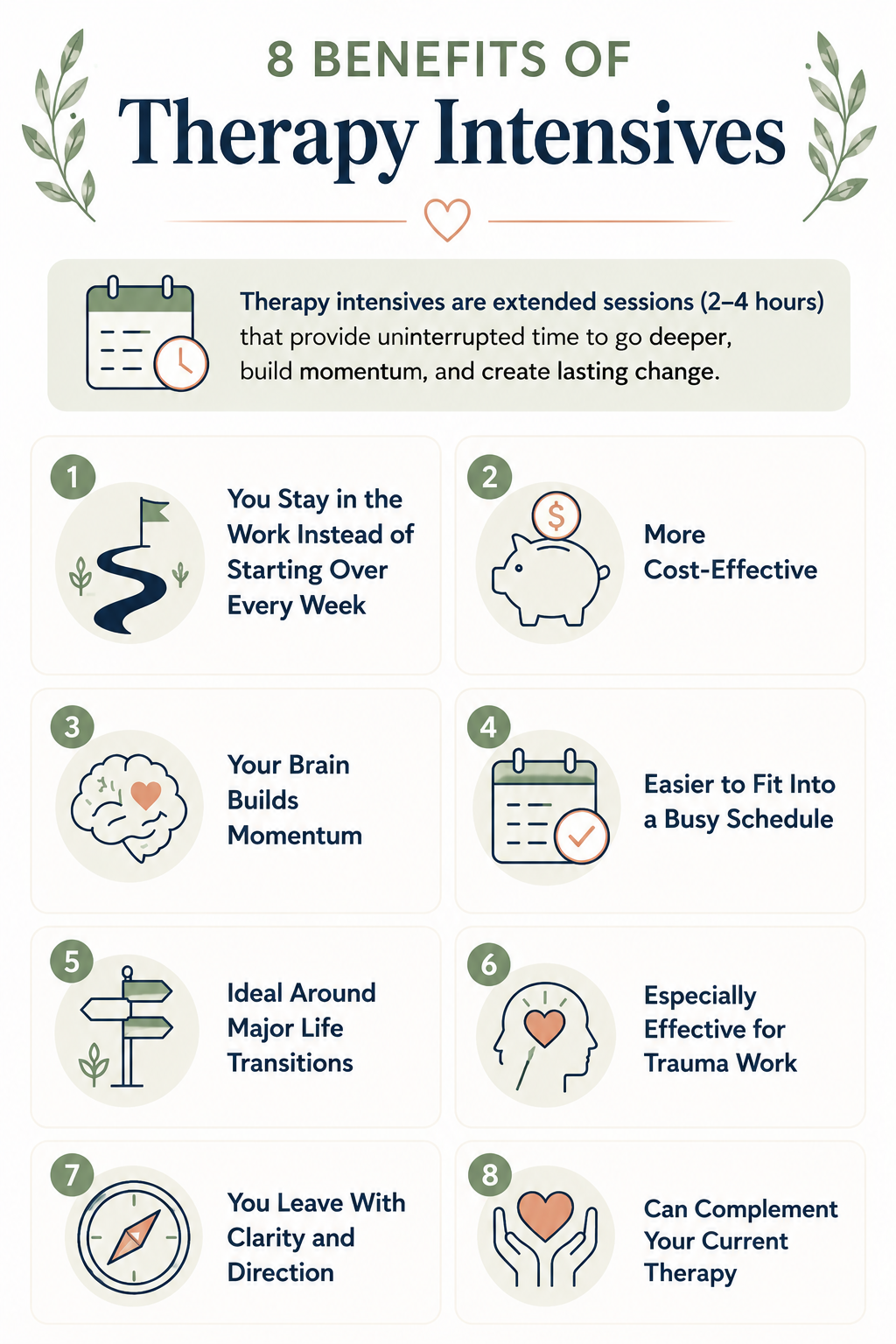
1. You Stay in the Work Instead of Starting Over Every Week
One of the biggest frustrations clients share is feeling like they spend the beginning of each therapy session getting caught up before they can return to the deeper work.
In typical weekly sessions that last 45- or 50-minutes, the time often includes checking in about the past week, discussing current stressors, and reviewing progress. While these conversations are important, they also take up valuable time. Just when you're making meaningful connections or beginning to process difficult emotions, the session comes to an end.
In intensive therapy sessions, you are able to move beyond those frequent stopping points. Instead of pausing when the conversation gets "juicy," you have the time to continue exploring, processing, and finding resolution while everything is still fresh. Many clients leave feeling like they've completed an important chapter rather than simply pressing pause until next week. These extended sessions are especially helpful for those with severe mental health challenges.
2. Therapy Intensives Can Be More Cost-Effective
At first glance, an intensive may seem like a larger investment than a traditional therapy session. However, when comparing an intensive with ongoing weekly care, evaluating the return on investment matters, and many clients are surprised to find that it can actually be a more efficient use of both their time and their money.
With weekly therapy, each appointment includes time spent reconnecting, reviewing what's happened since the previous session, and rebuilding momentum. During an intensive, that momentum continues uninterrupted, making it a more effective and efficient treatment option for some clients seeking concentrated care and allowing significantly more time for meaningful therapeutic work.
While every person's journey is different, many clients find they're able to accomplish in a single intensive what might otherwise take months of shorter sessions. Research suggests intensive therapy can rival months of traditional weekly therapy sessions and may lead to faster symptom reduction than traditional therapy. The goal isn't to rush the healing process—it's to spend more of your therapy time actually doing the work.
And when you are able to move through your healing journey more efficiently, you actually save money because you are able to get back to your baseline and typical daily life faster.
3. Your Brain Builds Momentum
Emotional work takes time.
Your nervous system needs an opportunity to settle before it feels safe enough to explore difficult memories, emotions, or long-standing patterns. In shorter sessions, you may only reach that place near the end of your appointment. Some people choose intensive therapy because they want rapid treatment without committing to months of appointments.
An intensive gives your brain the opportunity to stay engaged once you've reached that deeper level of processing. Instead of reopening the same emotional door week after week, you have the space to continue moving forward while your mind and body remain fully engaged in the therapeutic process.
With protected time for focused work, clients can make significant progress and experience rapid symptom relief in just a few days.
4. They're Easier to Fit Into a Busy Schedule
Between work, parenting, school schedules, and other responsibilities, finding time for weekly appointments isn't always easy.
For many people, taking one morning or afternoon for an intensive is actually simpler than rearranging their schedule every week for several months. Parents, healthcare professionals, teachers, business owners, and anyone with a demanding calendar often appreciate having the flexibility to make meaningful progress in fewer visits.
5. Therapy Intensives Are Ideal Around Major Life Transitions
Life transitions often bring old emotions and unresolved experiences to the surface.
Whether you're preparing for marriage, welcoming a baby, recovering from a divorce, changing careers, grieving a loss, or relocating, an intensive provides dedicated time to process those emotions before they begin affecting other areas of your life.
Many clients choose an intensive because they know a significant transition is approaching and want to move into that next chapter with greater clarity, confidence, and emotional resilience. For those carrying unresolved trauma, formats like EMDR Intensives and ART + HOCI Therapy Intensives are also effective for PTSD and anxiety disorders. Clients often report faster relief from anxiety and trauma symptoms in this format, and one study found EMDR intensives significantly reduced trauma symptoms.
6. They're Especially Effective for Trauma Therapy
Trauma work often benefits from having uninterrupted time to safely process experiences without feeling rushed.
At Creekside Counseling, we offer both EMDR Intensives and ART + HOCI Therapy Intensives, two evidence-based approaches that help clients process distressing memories and reduce the emotional impact those experiences continue to have today. These intensive therapy programs are a great option if you're ready for rapid and effective treatment.
Because trauma healing isn't simply about talking through what happened, having additional time allows clients to stay engaged in the therapeutic process without repeatedly stopping and restarting. For many people, this creates opportunities for deeper insight, emotional relief, and lasting change.
7. You Leave With Greater Clarity and Direction
One of the most rewarding parts of an intensive is the sense of clarity many clients experience afterward.
Rather than ending a session with unanswered questions or unfinished thoughts, clients often leave with a better understanding of themselves, greater confidence about their next steps, and practical strategies they can begin using right away.
While healing is rarely complete after a single session, an intensive often creates a level of momentum that can make future therapy feel more focused and purposeful.
8. Therapy Intensives Can Complement Your Current Therapy
Participating in a therapy intensive doesn't necessarily mean replacing your current therapist.
Many people use intensives to work through a specific issue or prepare for a challenging season while continuing regular therapy with their existing provider. Others choose an intensive after plateauing in weekly therapy and want additional time to move through a particular obstacle before returning to their usual schedule.
When appropriate, intensives can complement—not replace—ongoing therapeutic care. Follow-up sessions and ongoing support help maintain progress after therapy intensives. Aftercare is what turns insight into lasting change, especially for clients who build solid routines afterward.
Who Is a Good Candidate for a Therapy Intensive?
Therapy intensives may be a good fit if you:
Feel like you've plateaued in weekly therapy
Want to focus on one specific issue in greater depth
Trauma survivors or anyone who has experienced trauma, anxiety, grief, or burnout
Are preparing for a major life transition
Have limited availability for weekly appointments
Are motivated to engage in focused therapeutic work
Are a high-functioning adult who seems to be managing a lot on the outside but wants concentrated support
Have severe symptoms and a provider believes a higher level of focused care may be appropriate
Some intensive therapy options involve multiple sessions per week and may include individual work alongside group therapy or family therapy, depending on the program.
They aren't the right choice for everyone, and that's okay. Some individuals benefit more from the consistency and pacing of weekly therapy, particularly if they're experiencing an acute mental health crisis or need ongoing stabilization. A consultation can help determine which approach best fits your needs and goals.
Final Thoughts
Healing doesn't have to happen one hour at a time.
For many people, the opportunity to spend several uninterrupted hours with a skilled therapist creates space for deeper reflection, stronger emotional processing, and meaningful progress that simply isn't possible within the limits of a traditional session. Many people choose intensive therapy because an intensive program can offer accelerated results, faster skills acquisition, and a more personalized treatment plan with a high level of support.
If you've found yourself wishing for "just a little more time" at the end of therapy, an intensive may be worth exploring. At Creekside Counseling, our therapists offer EMDR and ART + HOCI therapy intensives for adults throughout Eden Prairie and the Twin Cities who are looking for a focused, evidence-based approach to healing.
Before committing, assess your time, energy, and other personal resources for this level of care. Whether you're navigating trauma, anxiety, burnout, or a major life transition, we'd be happy to help you determine whether a therapy intensive is the right next step for your journey. Book a call with us here to learn more.
Frequently Asked Questions About Therapy Intensives
Are therapy intensives more effective than weekly therapy?
Therapy intensives aren't necessarily better than weekly therapy—they're simply a different format. For some people, spending several uninterrupted hours with a therapist allows for deeper processing, stronger momentum, and faster progress than traditional 45- to 50-minute sessions. The right approach depends on your goals, symptoms, and personal circumstances.
Who is a good candidate for a therapy intensive?
Therapy intensives are often a great fit for adults experiencing trauma, anxiety, grief, burnout, or major life transitions. They can also benefit people who feel stuck in weekly therapy, have busy schedules, or want to focus deeply on a specific concern in a shorter period of time.
Can I do a therapy intensive if I already have a therapist?
Yes. Many people choose a therapy intensive to address a specific challenge while continuing to work with their regular therapist. An intensive can complement ongoing therapy by helping you make meaningful progress on a particular issue before returning to your usual schedule.
What issues can therapy intensives help with?
Therapy intensives can be helpful for trauma, PTSD, anxiety, burnout, grief, perfectionism, life transitions, and other concerns that benefit from focused therapeutic work. At Creekside Counseling, we offer EMDR Intensives and ART + HOCI Therapy Intensives to help adults process difficult experiences in a supportive, evidence-based environment.
