

Why Does My Child Get So Angry Over Small Things?
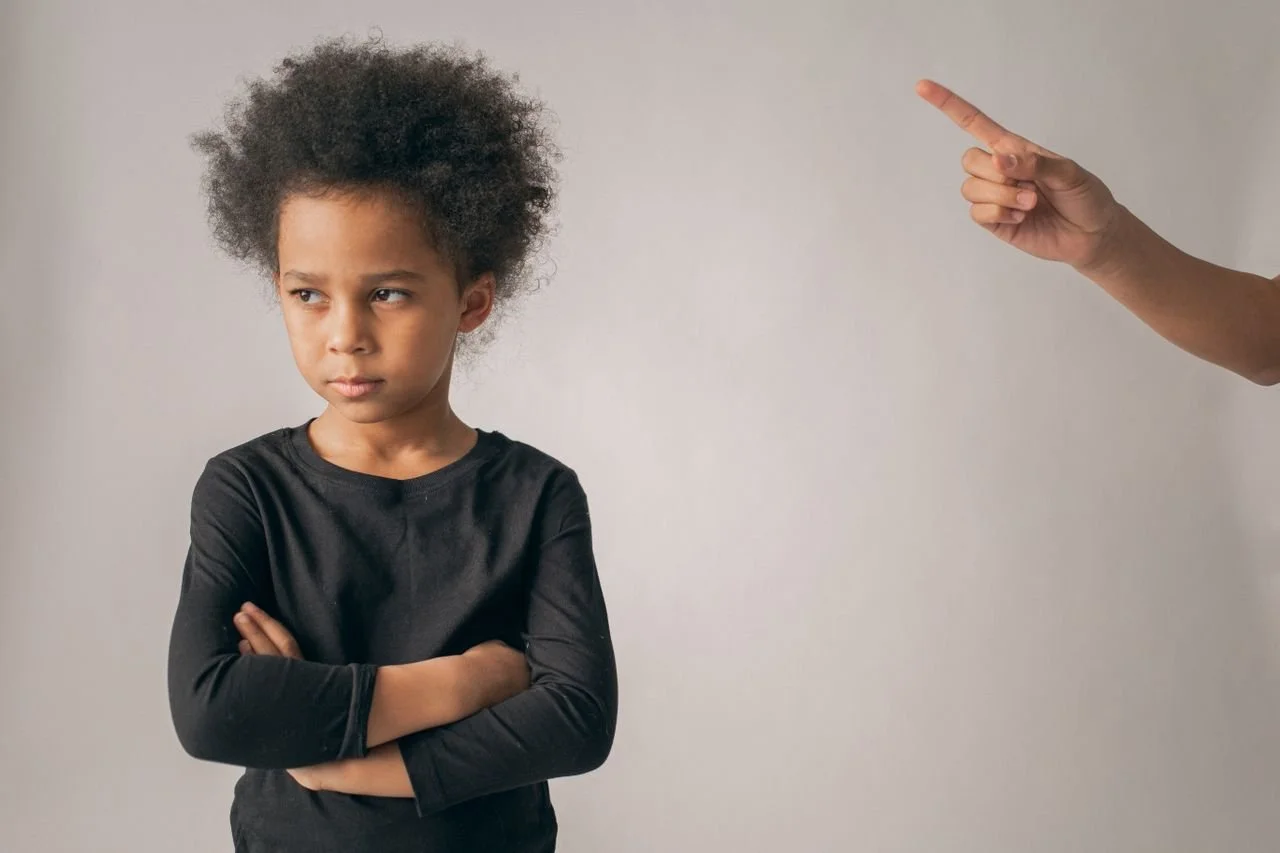
If you've ever found yourself wondering, "Why does my child get so angry over small things?", you're not alone. Many parents are surprised by how quickly a seemingly minor disappointment—being told "no," putting on shoes, turning off the TV, or getting the wrong color cup—can turn into tears, yelling, or even aggression.
As child therapists, this is one of the most common concerns we hear from families. Parents often worry that their child gets angry over small things or wonder if these intense reactions are a sign of anger issues in children.
The good news is that big emotions don't always mean something is wrong. In many cases, children are still developing the skills they need to manage frustration, disappointment, and overwhelming feelings. However, frequent or intense anger can also signal underlying challenges that deserve attention.
In this article, we'll discuss why children get angry over small things, what's considered typical at different ages, when anger may be a sign of a deeper concern, and practical strategies parents can use to support emotional regulation at home.
Is My Child's Anger Normal?
One of the first questions many parents ask is, "Is my child's anger normal?"
The answer is often yes.
Young children experience emotions much more intensely than adults because the parts of the brain responsible for self-control, problem-solving, and emotional regulation are still developing. They feel disappointment, frustration, embarrassment, and excitement just as strongly as adults—but they don't yet have the tools to manage those emotions effectively.
For toddlers and preschoolers, it's common to become upset when:
A routine changes unexpectedly
They can't communicate what they want
They're asked to stop a preferred activity
They don't get their way
They're tired, hungry, or overstimulated
Even school-aged children can struggle when emotions feel bigger than their ability to cope.
While occasional outbursts are a normal part of development, it's worth paying closer attention if anger becomes frequent, aggressive, or begins interfering with daily life, friendships, or family relationships.
Why Does My Child Get So Angry Over Small Things?
Often, what looks like an overreaction is actually the result of many small stressors building up beneath the surface.
As therapists, we encourage parents to think of behavior as communication. Instead of asking, "How do I stop this?" try asking, "What is my child trying to tell me?"
Some common reasons children become easily frustrated include:
Emotional Regulation Skills Are Still Developing
Children aren't born knowing how to calm themselves when they're upset. Emotional regulation is a skill that develops gradually with support from caring adults.
When a child melts down over something that seems insignificant, it often means their emotions have become bigger than their current coping abilities.
Their Nervous System Is Overloaded
Sometimes the issue isn't the toy, the bedtime routine, or the snack.
It's everything that came before it.
A busy school day, sensory overload, lack of sleep, hunger, or several small disappointments can leave a child's nervous system with very little capacity to handle one more challenge.
The "small thing" simply becomes the tipping point.
Anxiety Can Look Like Anger
Many parents are surprised to learn that anxiety doesn't always look like worry.
For some children, anxiety shows up as irritability, frustration, perfectionism, or explosive reactions when things don't go as expected.
Children often become angry when they feel out of control or uncertain.
Big Life Changes Can Increase Emotional Reactions
Moving, changing schools, welcoming a new sibling, family conflict, divorce, grief, or other significant transitions can all affect a child's ability to regulate emotions.
Even positive changes can temporarily increase emotional sensitivity. A consistent routine can help a child feel more secure during transitions.
Underlying Developmental or Mental Health Concerns
For some children, frequent anger may be related to ADHD, anxiety disorders, autism spectrum disorder, sensory processing differences, trauma, or learning challenges.
This doesn't mean every angry child has a diagnosis, but it's one reason why ongoing concerns are worth discussing with a pediatrician or child therapist.
What About Anger Issues in Toddlers?
Parents of toddlers often ask about anger issues in toddlers or worry about aggressive behavior in 2 year olds, and these reactions are especially common in children younger than 4 years old.
It's important to remember that toddlers have very limited language and self-control. Hitting, biting, throwing toys, or screaming are often attempts to communicate frustration rather than intentional acts of aggression.
Toddlers are also learning that they have opinions, preferences, and independence, which naturally leads to more conflict with caregivers.
While these behaviors are common, they shouldn't simply be ignored. Calm, consistent responses and age-appropriate limits help toddlers gradually learn safer ways to express their feelings.
If aggressive behavior is severe, happens frequently, or continues well beyond what is developmentally expected, especially if tantrums continue, seeking professional support can help identify what's driving the behavior.
Practical Strategies to Help Your Child Manage Anger
Although every child is different, there are several strategies we often recommend to families.
Stay Calm First
When your child's emotions escalate, your nervous system becomes one of their biggest sources of regulation.
Taking a slow breath, lowering your voice, and staying calm helps you remain calm in the moment, communicating safety far more effectively than yelling or lengthy lectures.
Remember, regulation is contagious. Over time, this can help reduce outbursts and angry behavior.
Validate Before You Problem Solve
Validation doesn't mean agreeing with the behavior.
It means acknowledging the emotion.
Try saying:
"I can see you're really frustrated right now."
Once children feel understood, they're often more able to hear guidance.
Look for Patterns
Instead of focusing only on the outburst itself, become curious about what happened beforehand.
Ask yourself:
Were they hungry?
Were they tired?
Did something stressful happen at school?
Was there a transition?
Have they had enough downtime today?
Patterns often reveal triggers you might otherwise miss.
Teach Coping Skills During Calm Moments
Children don't learn emotional regulation in the middle of a meltdown. Practice these effective strategies when everyone is calm, since that helps with managing anger and strengthens emotion regulation:
Practicing deep breathing
Naming emotions
Using movement to release energy
Asking for help
Taking a sensory break
Praise healthy expression of emotions to reinforce good behavior. Like any new skill, these strategies become more effective with practice.
Focus on Connection Before Correction
Children are much more receptive to guidance when they feel emotionally safe.
Instead of immediately correcting behavior, prioritize reconnecting first. A child who feels understood is often better able to learn from the situation once they're calm.
Taking deep breaths with your child, bringing them to a quiet place or safe space can also help your child with anger by deescalating the situation.
It can also help to praise the child for their positive behavior on a regular basis. You can even do this indirectly by complimenting your child to your partner or a friend when they are within earshot. This helps build the child's self esteem in a healthy way.
When Should Parents Be Concerned?
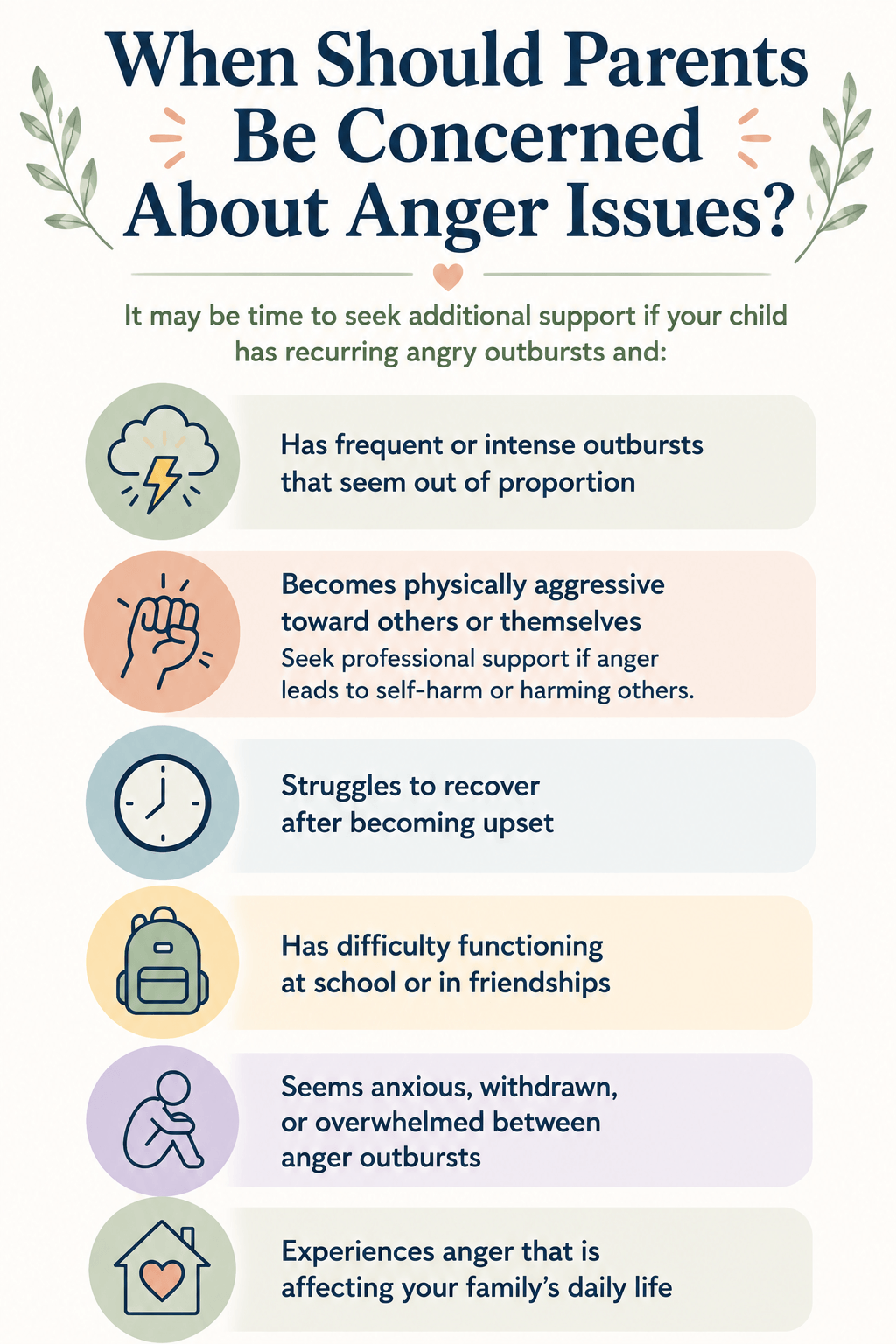
While occasional anger is part of growing up, it may be time to seek additional support if your child has recurring angry outbursts and:
Has frequent or intense outbursts that seem out of proportion
Becomes physically aggressive toward others or themselves; seek professional support if anger leads to self-harm or harming others
Struggles to recover after becoming upset
Has difficulty functioning at school or in friendships
Seems anxious, withdrawn, or overwhelmed between anger outbursts
Experiences anger that is affecting your family's daily life
Early support can make a significant difference. Therapy helps children understand their emotions, develop healthier coping skills, and strengthen communication skills as they learn to identify triggers and express emotions more clearly. It may be time to seek professional help when extreme anger becomes persistent or unsafe, since professional help can clarify what is driving these patterns and how to manage them.
Helping Children Build Emotional Regulation Takes Time
There isn't a quick fix for big emotions.
Learning to manage frustration, disappointment, and anger is a developmental process that happens over many years, and most children need time and repeated support from patient, responsive adults to learn these skills.
As parents, it's easy to focus on stopping the behavior. But lasting change comes from understanding the common triggers and underlying conditions that contribute to a child's strong feelings. Looking beneath the surface allows us to respond with curiosity instead of frustration, set clear limits that help a child understand what behavior is expected, and teach the skills children need to regulate their emotions more independently over time.
You Don't Have to Navigate This Alone
If you're asking yourself, "Why does my child get so angry over small things?", know that you're not the only parent going through this, and you don't have to figure it out by yourself.
At Creekside Counseling, we help children, older children, and families throughout Eden Prairie and the Twin Cities understand the "why" behind challenging behaviors. Our child therapists help kids with anger in children and related behavioral challenges, using play-based, attachment-focused, and evidence-based approaches focused on managing anger, reducing problem behavior, supporting emotional regulation, and addressing defiant behavior.
Whether you're concerned about anger issues in children,anxiety, behavioral challenges, or emotional regulation, we're here to support both you and your child. Mental health services can help when concerns continue or when a child's aggression is affecting home, school, or safety. Reach out today to schedule a consultation and learn how therapy can help your family move forward with greater confidence and connection.

About the Author
Elisabeth Emmerich, MSW, LICSW, is the owner and founder of Creekside Counseling, where she helps children, parents, and adults build healthier relationships with themselves and those they love. As a mom of three, she understands firsthand the challenges of balancing family life, mental health, and the pressures of everyday life, bringing both professional expertise and personal understanding to her work.