

How to Help an Autistic Child with Anxiety Disorders and Autism
Anxiety in autism is incredibly common, yet it is often misunderstood or overlooked. In fact, 40% of children with autism experience anxiety disorders. If you're parenting a child with autism, you've likely noticed that worry, fear, or emotional overwhelm can seem to accompany everyday situations that other children navigate more easily.
Your child may become distressed when routines change, avoid unfamiliar situations, ask repetitive questions for reassurance, or experience emotional meltdowns when things don't go as planned. Some children struggle with social anxiety, while others experience intense worries about school, making mistakes, sensory experiences, or separation from caregivers. For many families, autism and anxiety become closely intertwined, creating challenges both at home and at school.
As therapists who work with children and families navigating both anxiety and autism, one of the most important things we want parents to understand is this: anxiety is not a behavioral problem or a sign that your child is failing to cope. Often, it is a nervous system response to a world that can feel unpredictable, overwhelming, and difficult to navigate.
In this article, we'll explore the connection between anxiety disorders and autism, common anxiety triggers, signs of anxiety in autistic children, effective coping skills, and how therapy can help children build confidence and emotional resilience. Whether your child has recently been diagnosed with autism or you've been supporting them for years, these strategies can help you better understand and support their emotional needs.
Anxiety Disorders and Autism Spectrum Disorder: Why They Often Occur Together
Research consistently shows a strong connection between anxiety disorders and autism. In fact, children with autism are significantly more likely to experience anxiety than their neurotypical peers and over half of autistic adults will have an anxiety disorder (source).
This relationship between anxiety and autism exists for several reasons, and anxiety is more common across the autism spectrum than in the general population or among non autistic people. Many autistic children experience heightened sensory sensitivities, difficulty predicting what will happen next, challenges with social communication, and a strong preference for routine and consistency. All of these factors can contribute to chronic stress and worry that may develop into an anxiety disorder.
For some children, anxiety may present as constant questioning, perfectionism, avoidance, difficulty separating from parents, or co-occurring social anxiety. For others, it may show up as irritability, emotional outbursts, shutdowns, physical complaints like stomachaches and headaches, or obsessive compulsive disorder.
Because anxiety can look different in autistic children, it is sometimes overlooked or mistaken for autism-related behaviors alone, which can complicate an autism diagnosis or recognition of a separate anxiety disorder.
What Triggers Anxiety in Autism?
One of the most common questions parents ask is: What triggers anxiety in autism?
The answer varies from child to child, but there are several common triggers we see in therapy. For some autistic children, anxiety shows up as persistent worry or avoidance. For others, it can escalate into intense fear, emotional meltdowns, or even symptoms that resemble panic attacks when they feel overwhelmed. Understanding what contributes to anxiety in a child's daily life is one of the first steps toward helping them feel more confident and regulated.
Changes in Routine
Many autistic children rely on predictability to feel safe. Unexpected schedule changes, canceled plans, substitute teachers, vacations, or transitions can create significant distress.
Social Uncertainty
Social situations often involve unspoken rules, reading body language, and adapting to changing dynamics. For children with autism, uncertainty in social interactions can make some children feel anxious, especially when they are trying to interpret shifting expectations.
Sensory Differences and Overload
Loud noises, crowded spaces, bright lights, strong smells, or uncomfortable clothing can overwhelm a child's nervous system and trigger anxiety. For autistic children with sensory differences, sensory overload can occur when the brain is receiving more input than it can comfortably process. Busy stores, noisy classrooms, school assemblies, and public events can quickly become overwhelming and may lead to emotional dysregulation, withdrawal, or even panic attacks in some children.
Perfectionism and Fear of Mistakes
Many children with high functioning autism and anxiety place tremendous pressure on themselves. They may become upset when they make mistakes, struggle with uncertainty, or fear getting things wrong.
New or Unfamiliar Experiences
Trying a new activity, meeting new people, starting a new school year, or visiting unfamiliar places can trigger significant worry and, for some children, an intense fear of the unknown.
Understanding your child's individual triggers is one of the first steps in helping them manage anxiety more effectively and navigate daily life with greater confidence.
Signs of Anxiety in Autism
Anxiety in autism doesn't always look like obvious worry or fear, and it may show up through emotional, behavioral, and physical symptoms instead.
Parents often tell us things like:
"My child asks the same question over and over."
"They get stuck on worst-case scenarios."
"They become extremely upset when plans change."
"They avoid situations that make them uncomfortable."
"They seem constantly on edge."
Some common symptoms of anxiety in autistic people include:
Excessive reassurance seeking
Repetitive questioning
Avoidance of new situations
Emotional outbursts or meltdowns
Sleep difficulties
Physical complaints such as headaches or stomachaches
Increased rigidity
Trouble separating from caregivers
Social withdrawal
This kind of behavior can disrupt everyday life and, for some children, interfere with day to day lives at home and school.
When anxiety becomes chronic, it can affect school performance, friendships, family relationships, and self-confidence.
High Functioning Autism and Anxiety
Children with high functioning autism and anxiety often present differently than younger children or those with more significant support needs, and this pattern is often discussed in older children, teens, and eventually autistic adults.
Because these children are often highly aware of social differences, that awareness can increase anxiety around peer relationships and other social anxiety concerns as they get older.
They may worry about:
Fitting in with peers
Making mistakes
Being judged by others
Academic performance
Changes in routine
Future events
Many become skilled at masking their anxiety throughout the day, only to release their emotions once they get home.
Parents are often surprised to learn that the child who appears calm at school may be working incredibly hard to manage anxiety internally.
Separation Anxiety and Autism
Separation anxiety can be especially common among children with autism. While many young children experience some distress when separating from a parent or caregiver, autistic children may have a harder time adjusting to these transitions due to their strong need for predictability, routine, and familiarity.
A child with autism may become extremely distressed when:
Going to school or daycare
Attending camps or extracurricular activities
Staying with a babysitter or family member
Sleeping away from home
Experiencing changes in caregiving routines
For some children, separation anxiety is rooted in uncertainty about what will happen while they are apart from their parent. Others may struggle because their parent serves as a primary source of co-regulation and emotional safety.
Parents may notice behaviors such as excessive reassurance-seeking, frequent calls or texts, difficulty separating at drop-off, physical complaints like stomachaches, or emotional meltdowns before transitions.
Supporting separation anxiety in autism often involves gradual exposure, visual schedules, predictable routines, and helping children develop confidence that they can manage temporary separations safely. Therapy can also help children build coping skills and reduce anxiety surrounding transitions away from caregivers.
How to Treat Anxiety in Autism
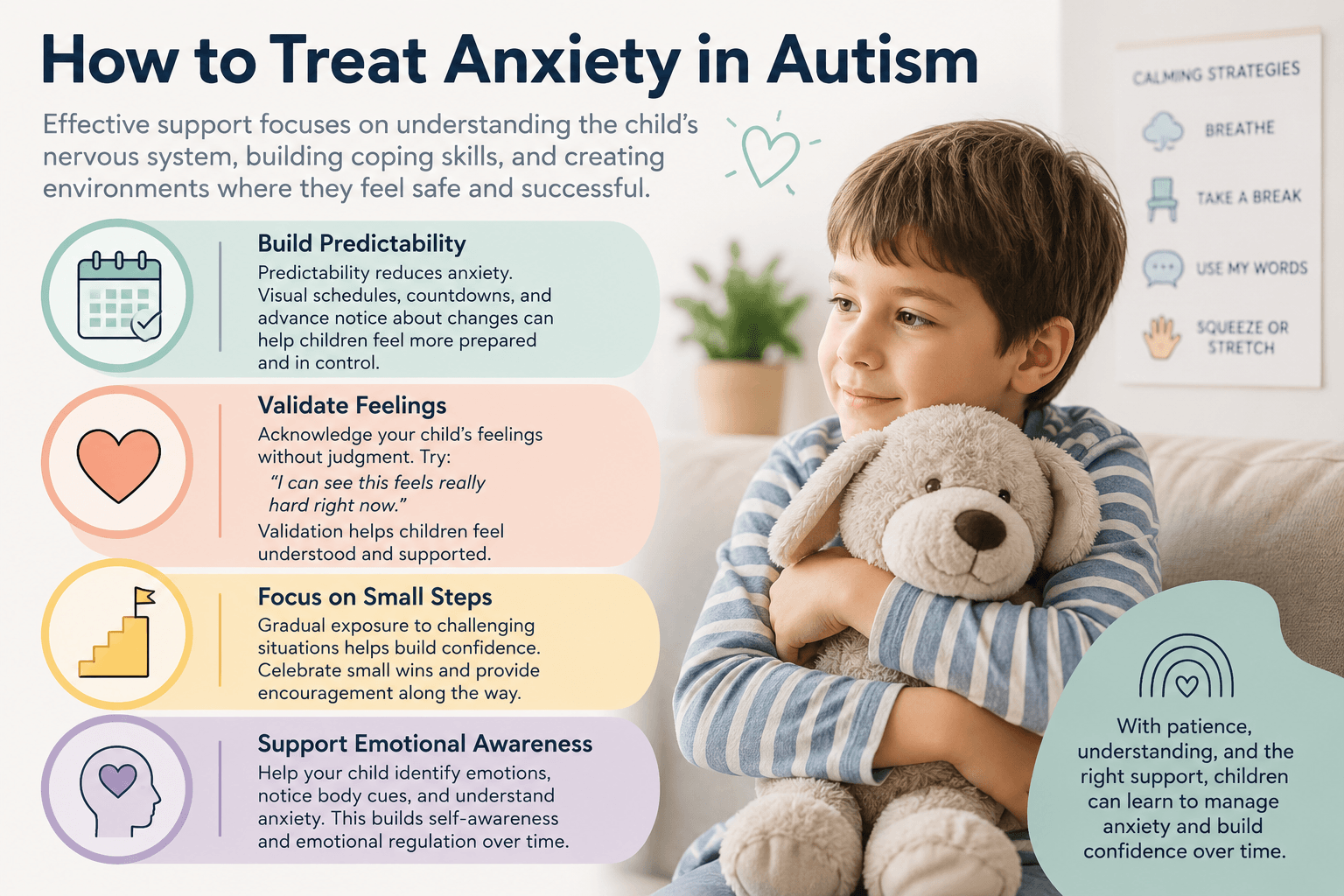
If you're wondering how to treat anxiety in autism, it's important to understand that there is no one-size-fits-all approach, and treatment should be individualized to the child’s needs.
The most effective support focuses on understanding the child's nervous system, building coping skills, and creating environments where they feel safe and successful. Treating anxiety may include behavioral supports, family strategies, and professional care, and without tailored support, anxiety can create barriers to participation, learning, and communication.
Build Predictability to Reduce Anxiety
Predictability reduces anxiety.
Visual schedules, countdowns, advance notice about changes, and clear expectations can help children feel more prepared and in control.
Validate Feelings
When a child is anxious, our instinct is often to reassure them immediately.
While reassurance can be helpful, it is equally important to acknowledge their experience.
Try: "I can see this feels really hard right now."
You can also talk with your child about what feels hard, using whatever communication style works best for them.
Validation helps children feel understood rather than dismissed.
Focus on Small Steps
Avoid forcing children into overwhelming situations all at once.
Instead, gradually expose them to challenges while providing support and encouragement.
Confidence grows through successful experiences.
Support Emotional Awareness
Many autistic children struggle to identify and communicate emotions.
Helping children recognize body cues, label feelings, and understand anxiety can improve self-awareness and regulation by tracking patterns in emotions, body cues, special interests, and changes in energy levels.
What Are Coping Skills for Anxiety in Autism?
Many parents ask: What are coping skills for anxiety in autism?
The best coping strategies are often individualized, but some common tools include:
Deep Breathing
Simple breathing exercises can help children feel calmer and reduce anxiety during moments of stress.
Sensory Supports
Noise-canceling headphones, weighted blankets, fidget tools, or access to quiet spaces can help reduce overwhelm; for example, noise cancelling headphones can help regulate sensory input in overstimulating environments.
Movement Breaks
Physical activity can be incredibly regulating for anxious children.
Walking, jumping, stretching, swinging, or other movement activities help release nervous system tension.
Visual Supports
Visual schedules, social stories, and checklists help reduce uncertainty and increase predictability.
Safe Spaces
Having a designated calming space at home or school can help children reset when anxiety begins to build.
Remember that coping skills work best when practiced regularly—not only during moments of crisis.
How Therapy Can Help Autistic Children with Anxiety
Therapy can provide children with a safe, supportive environment for mental health support, helping them understand their anxiety and develop effective coping skills.
In therapy, we help children:
Recognize signs of anxiety
Identify triggers
Build emotional regulation skills
Increase flexibility
Develop coping strategies
Practice problem-solving
Strengthen confidence
Cognitive behavioural therapy may help some children when it is adapted to the needs of an autistic person and guided by a qualified therapist.
Just as importantly, therapy helps parents better understand the connection between autism and anxiety so they can respond in ways that support regulation rather than unintentionally increasing stress.
A Gentle Reminder for Parents
If your child struggles with anxiety, it does not mean they are weak, difficult, or incapable.
Children with autism or asperger syndrome often experience the world differently than neurotypical people. What may seem like a small challenge to someone else can feel overwhelming to a child whose nervous system is working overtime to process sensory information, social situations, and unexpected change.
With patience, understanding, and the right support, children can learn to manage anxiety and develop confidence in their ability to navigate the world.
Progress may be gradual, but growth is absolutely possible.
Support for Children with Autism and Anxiety
At Creekside Counseling, we support children and families navigating autism, anxiety, emotional regulation challenges, social difficulties, and related concerns such as depression when relevant.
Our therapists use neurodiversity-affirming, relationship-based approaches that help children feel understood, supported, and empowered while helping families consider whether therapy, medication, or other supports are appropriate.
Connecting families with other autistic people or resources like Molehill Mountain can also be helpful when age-appropriate.
If your child is struggling with autism and anxiety, we'd love to help you find the tools and support your family needs. Book a free consultation here.
Frequently Asked Questions About Autism and Anxiety
Is anxiety common in children with autism?
Yes. Anxiety disorders and autism frequently occur together. Many autistic children experience worries related to social situations, sensory sensitivities, changes in routine, or uncertainty about what to expect.
What are the signs of anxiety in autism?
Anxiety in autism can look different from child to child. Common signs include repetitive questioning, avoidance of new situations, emotional meltdowns, sleep difficulties, perfectionism, separation anxiety, stomachaches, and increased rigidity around routines.
How can I help my autistic child manage anxiety?
Creating predictable routines, preparing children for changes, using visual supports, teaching coping skills, and validating emotions can all help reduce anxiety. Therapy can also help children build emotional regulation skills and confidence in managing stressful situations.
When should I seek therapy for autism and anxiety?
If anxiety is interfering with your child's daily life, school performance, friendships, family relationships, or overall well-being, therapy may be beneficial. A therapist can help identify triggers, teach coping strategies, and support both children and parents in managing anxiety more effectively.