


6 year old receiving trauma treatment from a therapist specializing in EMDR for children in Minnesota.
When a child experiences a traumatic event, the impact doesn’t always fade with time. Instead, the memory can become “stuck” in the nervous system, showing up as anxiety, sleep disturbances, irritability, avoidance behaviors, or even symptoms of posttraumatic stress disorder (PTSD). Childhood trauma can deeply affect how a child feels about themselves, others, and the world around them — often long after the event has passed.
As a parent, it can feel overwhelming to watch your child struggle and not know how to help. You may notice changes in behavior, increased fears, emotional outbursts, or regression. You might even wonder whether traditional talk therapy is enough.
Eye Movement Desensitization and Reprocessing (EMDR) therapy — often referred to simply as eye movement desensitization — is an evidence-based treatment designed to help children safely process and reprocess traumatic memories. Rather than requiring a child to repeatedly retell the details of a painful experience, EMDR works with the brain’s natural healing system to reduce the emotional intensity attached to a traumatic event.
In this guide, we’ll explore how EMDR therapy works for children with trauma, how it can help with anxiety and posttraumatic stress disorder, the pros and cons of EMDR therapy, and what parents should know when considering this approach for their child.
What Is EMDR Therapy and How Can EMDR Help with Trauma?
When a child experiences childhood trauma — whether from a single traumatic event or ongoing traumatic experiences such as child abuse, medical trauma, accidents, bullying, or family instability — the brain may struggle to fully process what happened. Instead of being stored as a past memory, the experience can remain emotionally “active,” triggering fear, anxiety, shame, or intense reactions long after the danger has passed.
EMDR is considered a trauma informed treatment because it recognizes how trauma affects the brain, body, and nervous system. Rather than focusing only on behavior or surface-level coping skills, this approach helps address the root of distress by targeting the memories that continue to drive emotional reactivity.
During an EMDR session with a child, the therapist carefully guides the child through a structured process that supports emotional safety and regulation. With developmentally appropriate techniques — such as storytelling, drawing, play-based strategies, or gentle bilateral stimulation (like tapping) — the therapist helps the child’s brain reprocess distressing memories in a way that reduces their emotional charge.
Importantly, children do not have to verbally recount every detail of a traumatic experience for EMDR to be effective. The focus is not on reliving the event, but on helping the brain integrate the memory in a healthier, less overwhelming way. As the memory becomes more fully processed, many children experience decreased anxiety, fewer intrusive thoughts, improved sleep, and a greater sense of emotional stability.
Because EMDR works with the nervous system rather than against it, many parents notice that their child’s reactions begin to feel less intense and more manageable. The goal isn’t to erase the past, but to help the child remember it without feeling like they are still living in it.
EMDR Therapy for Children with Trauma and Anxiety
Trauma and anxiety often go hand in hand. After a distressing or overwhelming experience, a child’s nervous system can remain on high alert. Even when the original danger is no longer present, the brain may continue scanning for threats. This is especially common in children who have developed symptoms of Post Traumatic Stress Disorder (PTSD) or who carry unprocessed traumatic memories.
For many children, anxiety becomes the visible surface symptom of something deeper. You might notice separation anxiety, sleep difficulties, irritability, avoidance of certain places or people, heightened startle responses, or frequent meltdowns that seem out of proportion to the situation. These reactions are not signs of defiance — they are signs that the nervous system is still reacting as if the traumatic experience is happening now.
EMDR treatment helps interrupt this cycle by allowing the brain to reprocess traumatic memories in a way that reduces their emotional intensity. Through structured bilateral stimulation techniques — commonly associated with eye movement desensitization — the brain is supported in integrating memories so they are stored as past events rather than ongoing threats.
As traumatic memories become less charged, anxiety symptoms often decrease. Children may feel calmer in situations that once triggered distress. Sleep may improve. Emotional outbursts may become less frequent. Instead of reacting automatically from fear, the child gains more access to their thinking brain and coping skills.
For children with Post Traumatic Stress Disorder, EMDR treatment has been recognized as an evidence-based intervention. It can be especially helpful for children who struggle to verbally process what happened or who feel overwhelmed when asked to talk in detail about the trauma. Because EMDR focuses on how memories are stored rather than requiring repeated storytelling, many children experience relief without feeling retraumatized.
Ultimately, EMDR therapy for children with trauma and anxiety supports the brain’s natural healing process. It doesn’t erase the past — it helps children move forward without their past experiences controlling their present reactions.
EMDR for Children with PTSD
When children and adolescents develop Post Traumatic Stress Disorder (PTSD), their symptoms often extend beyond typical anxiety. PTSD can show up as intense emotional reactions, avoidance of reminders of the trauma, increased irritability, sleep disturbances, or vivid dreams and nightmares related to upsetting events. Some children become hypervigilant and easily startled, while others withdraw or seem emotionally numb.
PTSD develops when the brain has difficulty fully processing a traumatic experience. Instead of being stored as something that happened in the past, the memory remains “live,” triggering fear responses in the present. This is where EMDR can be particularly effective.
EMDR supports the brain in reprocessing traumatic memories so they are integrated in a more adaptive way. Through structured bilateral stimulation and developmentally appropriate techniques, the therapy helps reduce the emotional intensity attached to upsetting events. As reprocessing occurs, many children experience fewer trauma-related triggers, improved sleep, and reduced frequency of vivid dreams.
Research studies have shown EMDR to be an effective trauma-focused intervention for children and adolescents with PTSD. It is recognized as an evidence-based treatment by multiple professional organizations worldwide. One of the strengths of EMDR is that it does not require a child to repeatedly describe the trauma in detail, which can be especially helpful for younger children or those who feel overwhelmed by talking about what happened.
EMDR therapy can be used with children as young as 2 years old, although the approach is adapted significantly for developmental level. It often works best when a child has experienced a specific trauma with a clear beginning and end — such as a car accident, medical procedure, natural disaster, or isolated upsetting event. That said, skilled clinicians can also modify the approach for more complex or ongoing trauma.
For children struggling with PTSD, EMDR offers a structured and supportive path toward healing. Rather than teaching a child to simply cope with symptoms, it helps address the root of the distress so that traumatic memories no longer feel immediate, threatening, or overwhelming.
What Are the Pros and Cons of EMDR Therapy?
Like any treatment approach, EMDR has both strengths and considerations. Understanding these can help you decide whether it’s the right fit for your child.
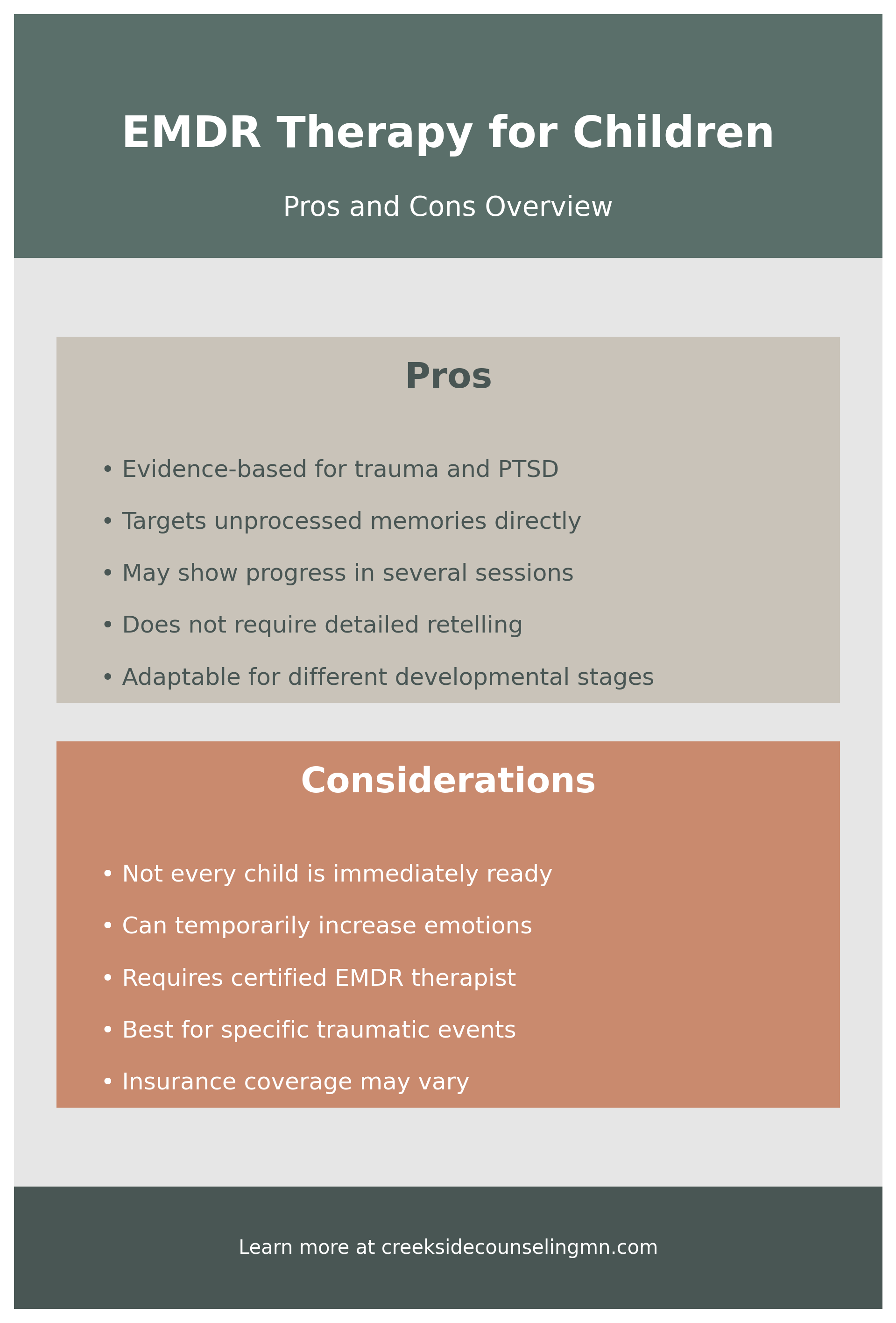
Pros of EMDR Therapy
Evidence-based and effective therapy for trauma and PTSD in children and adolescents
Helps target unprocessed memories at the root of anxiety and trauma symptoms
Often produces results in several sessions, rather than years of therapy
Does not require detailed verbal retelling of traumatic events
Can reduce physical symptoms of trauma, such as sleep disruption and emotional reactivity
Adaptable for different developmental levels, including older children who can engage more cognitively in the reprocessing work
Cons or Considerations
Not every child is immediately ready for trauma reprocessing work
May temporarily increase emotional intensity as memories are processed
Works best when there is a specific trauma with a clear beginning and end
Requires a properly trained, certified clinician
Insurance coverage and cost can vary depending on provider and location
EMDR can be a powerful and effective therapy, but the right approach depends on your child’s age, history, and emotional readiness.
EMDR Therapy Costs for Children
One of the most common questions parents ask is what EMDR therapy will cost. The answer can vary depending on several factors, including your provider’s training, location, and whether you are using insurance or paying privately.
Working with a trained EMDR therapist who specializes in childhood trauma and treating PTSD is essential. Because EMDR requires advanced certification and specialized trauma training — particularly when working with children who have experienced childhood abuse or other complex trauma — fees may reflect that additional expertise.
In general, EMDR therapy costs for children are similar to other specialized trauma-focused therapies. Some children may see improvement in several sessions, especially if they are processing a single traumatic event. Others, particularly those with more complex trauma histories, may require a longer course of treatment.
Insurance coverage can vary. Some plans cover trauma therapy, while others may consider EMDR a specialized service. It’s important to check directly with your insurance provider about benefits related to treating PTSD or trauma-based conditions.
For detailed information about our current rates and payment options, you can visit creeksidecounselingmn.com. We are always happy to discuss your child’s specific needs and help you understand what to expect financially before beginning therapy.
Investing in early intervention for childhood trauma can significantly reduce long-term emotional and behavioral challenges — and in many cases, shorten the overall duration of care.
How Does EMDR Compare to Other Types of Therapy?
When exploring treatment options for childhood trauma, many parents wonder how Eye Movement Desensitization and Reprocessing (EMDR) compares to other therapeutic approaches. EMDR is effective for children with PTSD from the age of 4 years. Each therapy style has strengths, and the best choice depends on your child’s needs, age, and symptoms.
EMDR vs. Traditional Talk Therapy
Traditional talk therapy sessions focuses on helping children understand their feelings, develop coping skills, and build insight. While this can be very helpful, children who have experienced childhood trauma may struggle to verbally process painful memories. EMDR takes a different approach. During an EMDR session, the focus is not on lengthy discussion, but on helping the brain reprocess distressing memories so they lose emotional intensity. For trauma that feels “stuck,” this memory-based approach can be more direct and efficient.
EMDR vs. Cognitive Behavioral Therapy (CBT)
CBT helps children identify unhelpful thoughts and replace them with more balanced ones. It is highly effective for anxiety, depression, and conditions like major depressive disorder. However, CBT primarily works with current thought patterns. EMDR, on the other hand, targets the original traumatic memories that may be driving those thoughts. In some cases, EMDR and CBT are used together — CBT to strengthen coping skills and EMDR to resolve underlying trauma.
EMDR vs. Play Therapy
Play therapy allows younger children to express emotions through toys, art, and storytelling. It is especially helpful for emotional expression and relationship building. EMDR can incorporate playful, developmentally appropriate techniques as well, but its primary goal is structured trauma reprocessing. For children with clearly defined traumatic events, EMDR may provide more focused relief from trauma-related symptoms.
Ultimately, EMDR is not “better” than other therapies — it is different. Therapists often combine EMDR with play therapy or storytelling to engage younger children. It is especially effective when a child’s anxiety, mood changes, or behavioral struggles are rooted in unresolved traumatic experiences. A skilled clinician can help determine whether EMDR, another therapy, or a combination of approaches will best support your child’s healing.
Where Can I Find a Certified EMDR Therapist for My Child?
If you’re considering Eye Movement Desensitization and Reprocessing for your child, finding a properly trained and certified EMDR therapist is essential. EMDR is a specialized trauma treatment, and working with a clinician who has advanced training in both eye movement desensitization and childhood trauma ensures your child receives safe, developmentally appropriate care.
When searching for an EMDR therapist specializing in children, look for the following:
Certification or training through EMDRIA (EMDR International Association)
Experience working specifically with children and adolescents
A trauma-informed approach to treating childhood trauma
Comfort adapting EMDR techniques to a child’s developmental level
Not every therapist who offers EMDR has the same level of experience working with children. An effective EMDR practice will prioritize emotional safety, pacing, and strong parent communication throughout the process. An experienced clinician will know how far to take a session and how much handholding needs to be done.
You can search for certified providers through the EMDRIA directory, ask your pediatrician for recommendations, or look for local practices that specialize in trauma treatment for children.
At Creekside Counseling, our clinicians are trained in trauma-informed care and EMDR therapy for children and adolescents. If you’re unsure whether EMDR is the right fit for your child, we’re happy to answer your questions and help you determine the next best step.
Is EMDR Right for My Child?
Deciding on the right treatment for your child can feel overwhelming, especially when trauma or PTSD symptoms are involved. EMDR may be a strong option if your child has experienced one of the leading causes of childhood trauma — such as accidents, medical procedures, bullying, loss, or abuse — and continues to show signs of distress, anxiety, or avoidance.
EMDR for children adapts the standard eight-phase adult protocol to the child's developmental, cognitive, and emotional stage. A trained therapist will modify language, pacing, and techniques to ensure the process feels safe and appropriate for your child’s age. Sessions may incorporate play, drawing, storytelling, or gentle bilateral stimulation to support healing.
If your child struggles with PTSD symptoms, recurring fears, vivid memories, or emotional reactivity tied to a specific event, EMDR can be an effective trauma-focused treatment. The best way to determine fit is through a consultation with a qualified therapist who can assess your child’s needs and recommend the most appropriate next step.
Supporting Your Child’s Healing Journey
Watching your child struggle after a traumatic experience can feel heartbreaking and overwhelming. The good news is that children are incredibly resilient, especially when they receive the right support. EMDR therapy offers a structured, evidence-based treatment option that helps children process trauma at the root, rather than simply managing symptoms.
Whether your child is experiencing anxiety, PTSD, emotional outbursts, sleep disturbances, or lingering fear after upsetting events, healing is possible. Working with a trained therapist who understands childhood trauma can help your child regain a sense of safety, confidence, and emotional balance.
You don’t have to navigate this alone. If you’re wondering whether EMDR is the right fit for your child, we invite you to reach out. Our team at Creekside Counseling is here to answer your questions, explain the process, and help you determine the best next step for your family.
Ready to explore EMDR therapy for your child?
Schedule a consultation today to learn how we can support your child’s healing and long-term well-being.