


Accelerated Resolution Therapy (ART) is a relatively new form of psychotherapy designed to help individuals process traumatic memories and reduce symptoms of anxiety, depression, and PTSD. Developed in 2008 by LMFT Laney Rosenzweig, ART holds a unique position in the mental health field due to its innovative and rapid approach to trauma resolution.
It’s common to feel confused about the many options for trauma and anxiety treatment. Many people ask:
What is accelerated resolution therapy and how does it work?
Is accelerated resolution therapy similar to EMDR?
How does ART compare to other trauma therapies?
This article serves as a clear, research-informed guide to help you understand the pros and cons of ART.
What Is Accelerated Resolution Therapy and How Does It Work?
Accelerated Resolution Therapy (ART) is a psychotherapy technique designed to help individuals process and resolve traumatic memories quickly and effectively. ART uses therapist-guided eye movements to facilitate the positive visualization of memories or experiences. Unlike traditional art therapy, which involves creative visual arts like painting or sculpting, ART is not art therapy; it is a specialized psychotherapy technique that focuses on trauma processing through structured protocols.
ART combines elements of various therapies, such as EMDR (Eye Movement Desensitization and Reprocessing), cognitive-behavioral therapy, and guided imagery. ART focuses on imagery and body awareness, distinguishing it from other trauma therapies by emphasizing the replacement of negative images with positive ones and addressing physical sensations associated with trauma. During sessions, the therapist helps guide the client through visualization, desensitization, and imagery replacement techniques, facilitating relaxation and reframing traumatic imagery.
ART is an approved treatment recognized by authoritative bodies like the American Psychological Association, which supports its credibility and can aid in insurance billing. While ART is primarily used for trauma-related conditions such as PTSD, anxiety, and depression, it can also be effective for other mental health conditions associated with unresolved trauma.
Major Components of Accelerated Resolution Therapy
Accelerated Resolution Therapy (ART) stands out as a breakthrough therapy for treating post traumatic stress disorder, trauma-related conditions, and other mental health challenges. Its effectiveness comes from a unique combination of major components that work together to help individuals process traumatic memories and achieve accelerated resolution of symptoms.
1. Therapist-Guided Eye Movements
At the heart of ART is the use of smooth pursuit eye movements, a form of eye movement desensitization similar to what is used in EMDR therapy. During an ART session, the therapist guides the client’s eye movements back and forth. This bilateral stimulation helps the brain reprocess trauma, reducing the emotional distress tied to traumatic events and negative memories.
2. Voluntary Image Replacement
A key difference between ART and other therapies is its focus on voluntary image replacement. Instead of reliving the entire traumatic event, clients are guided to replace negative images and disturbing memories with positive ones through visualization techniques. This process allows for significant improvement in trauma symptoms without the need for detailed verbal recounting.
3. Guided Imagery and Visualization Techniques
ART incorporates guided imagery to help clients visualize new, positive outcomes and experiences. This approach not only helps to replace distressing memories but also supports the brain in forming healthier associations, promoting mental wellness and emotional healing.
4. Relaxation Response
Throughout the ART process, therapists use techniques to induce a relaxation response. This helps clients remain calm and grounded while processing trauma, making it easier to address traumatic experiences without becoming overwhelmed by emotional distress.
5. Exposure Therapies and Memory Reconsolidation
ART blends elements of exposure therapies, allowing clients to briefly recall troubling memories in a safe, controlled way. The therapy then uses memory reconsolidation to help the brain store these memories differently, reducing trauma-related symptoms and supporting long-term healing.
Because ART is a stand-alone treatment that often delivers results in just a few sessions, it offers a rapid and effective treatment option for those seeking relief from trauma symptoms. Mental health professionals appreciate ART’s versatility, as it can be used alongside other therapies or as a primary trauma therapy for treating PTSD, phobias, grief, and more.
By focusing on these major components—therapist-guided eye movements, voluntary image replacement, guided imagery, relaxation, and memory reconsolidation—Accelerated Resolution Therapy provides a powerful path to healing trauma and improving mental health. Whether you are undergoing accelerated resolution therapy for the first time or exploring new therapy modalities, ART offers hope for significant improvement and lasting relief from distressing memories.
Evidence for Accelerated Resolution Therapy
When considering trauma treatment, many people want to understand the evidence for accelerated resolution therapy. While ART is a newer therapeutic approach, several research studies have shown promising results for reducing symptoms of PTSD. Early studies with trauma survivors and military veterans have found that participants often experience decreased intrusive memories, emotional distress, and sleep disturbances after completing ART sessions.
The research base for ART is emerging but growing. Studies involving veterans and individuals who have experienced significant trauma suggest that the therapy can help reduce hypervigilance, anxiety, and the emotional intensity connected to traumatic memories. Because ART focuses on changing how distressing images are stored in the brain, some individuals report symptom relief after relatively few sessions.
That said, the body of research supporting ART is still smaller than the evidence base for EMDR. Eye Movement Desensitization and Reprocessing has been studied for several decades and is widely recognized as an evidence-based trauma treatment.
Accelerated Resolution Therapy Pros and Cons
Pros
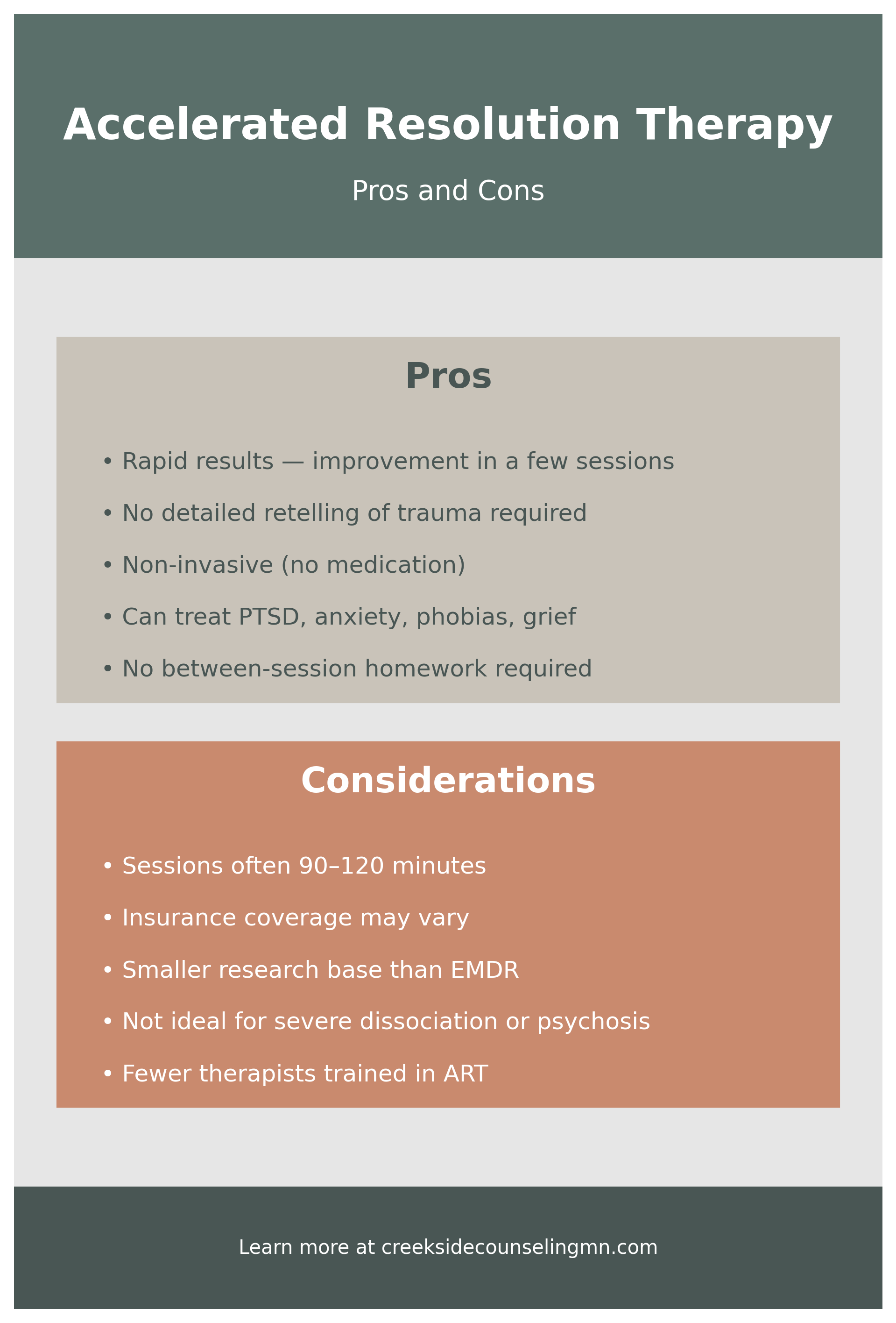
Accelerated Resolution Therapy (ART) offers several advantages as a trauma treatment. It is recognized by the American Psychological Association and can often be billed through insurance. Many therapists find ART quicker to learn compared to other modalities, and unlike cognitive behavioral therapy (CBT), it typically does not require homework between sessions. ART sessions can produce relatively rapid results, with some clients experiencing improvement in just a few sessions. It is also a non-invasive approach that does not require medication and can be used to address a range of mental health concerns, including PTSD, anxiety, depression, phobias, and grief.
Cons
However, there are also some limitations to consider. ART sessions are often longer than standard therapy appointments—typically 90 to 120 minutes—which may complicate insurance coverage. While research on ART is promising, it currently has a smaller evidence base compared to more established trauma therapies like EMDR. ART may also not be appropriate for individuals with active psychosis, severe dissociative disorders, or certain neurological conditions affecting eye movements. Additionally, because ART is a specialized treatment, access may be limited in some areas due to the smaller number of therapists trained in this approach.
How Much Does Accelerated Resolution Therapy Cost?
The cost of Accelerated Resolution Therapy is typically similar to other trauma therapies and depends on the provider’s credentials and session length; insurance coverage may vary, but because ART often requires fewer sessions, the overall cost can sometimes be lower—so it’s best to check directly with your provider about pricing and coverage.
Book a free consultation at Creekside Counseling and we can help you determine payment options.
How Does ART Compare to Other Trauma Therapies?
Accelerated Resolution Therapy (ART) stands out because it combines elements of EMDR with cognitive-behavioral and brief psychodynamic techniques. By incorporating elements from many therapies, ART offers a comprehensive and versatile approach to treating trauma and related disorders.
ART vs. EMDR
While both ART and EMDR use eye movements to process traumatic memories, ART is a more direct and rapid approach than EMDR, focusing on singular images rather than entire traumatic events. This can lead to faster results for some clients. Both ART and EMDR can be used to treat PTSD, phobias, anxiety, depression, and addictions.
ART and Psychodynamic Techniques
ART also integrates brief psychodynamic techniques, which help shift negative mental associations and perceptions related to trauma and stress. The therapist plays a key role in guiding clients to alter their responses to past negative imagery, similar to other therapies that use psychodynamic principles.
Accelerated Resolution Therapy vs EMDR
Accelerated Resolution Therapy (ART) and Eye Movement Desensitization and Reprocessing (EMDR) are both trauma-focused therapies that use alternating eye movements to help the brain process distressing memories. However, their structure and therapeutic focus differ.
EMDR follows a structured eight-phase treatment protocol and focuses on how traumatic memories are stored in the brain. During an EMDR session, the therapist guides the client through identifying target memories, associated thoughts, emotions, and body sensations while using bilateral stimulation to support memory processing. EMDR is a well-established, evidence-based treatment for trauma and PTSD and typically involves multiple sessions.
ART, on the other hand, is more directive and imagery-focused. It emphasizes reducing the distress connected to disturbing images through a technique called voluntary image replacement, where clients replace negative imagery with more positive or neutral images. ART often requires fewer sessions—sometimes as few as one to five—and does not require detailed verbal descriptions of traumatic events.
While ART and EMDR share similarities, including the use of eye movements and trauma reprocessing, EMDR tends to be more structured and cognitive-focused, whereas ART is shorter, more visually based, and emphasizes rapid symptom relief.
Accelerated Resolution Therapy vs Hypnosis
When comparing accelerated resolution therapy vs hypnosis, it’s important to understand that the two approaches work very differently. Accelerated Resolution Therapy (ART) does not involve putting a client into a trance or altered state of consciousness. Instead, the client remains fully awake, aware, and in control throughout the session. The therapist guides the process using structured eye movements to help the brain process and reframe distressing images or memories.
Hypnosis, on the other hand, typically involves guiding a person into a relaxed, trance-like state in order to increase suggestibility and access subconscious material. ART is grounded in trauma-processing and memory reconsolidation, while hypnosis is based on suggestion and altered awareness. Although both therapies may involve visualization techniques, ART operates from a different theoretical foundation and focuses specifically on resolving distress connected to traumatic memories.
Accelerated Resolution Therapy and OCD
Accelerated Resolution Therapy (ART) is being explored as a treatment for obsessive-compulsive disorder (OCD), especially in cases where intrusive imagery is a prominent symptom. While ART is not considered the gold standard for OCD—Exposure and Response Prevention (ERP) remains the first-line treatment—it may offer benefits for certain individuals.
ART may be particularly helpful for individuals whose OCD is linked to past trauma. In these cases, ART can lead to a significant reduction in trauma-related symptoms of anxiety, depression, and intrusive thoughts. This makes ART a promising option for those whose OCD symptoms are intertwined with unresolved traumatic experiences.
Who Is a Good Fit for Accelerated Resolution Therapy?
Accelerated Resolution Therapy (ART) can be a helpful treatment option for individuals who are struggling with symptoms related to single-incident trauma, PTSD, phobias, grief, or performance anxiety. Because ART focuses on changing the way distressing images and memories are stored in the brain, it can be particularly effective for people whose symptoms are connected to specific upsetting experiences.
However, ART may not be the best fit for everyone. Individuals with severe dissociation or significant emotional instability may require other stabilization approaches first. A clinical evaluation with a trained therapist is important to determine whether ART is appropriate based on a person’s trauma history, symptom severity, and comfort with imagery-based therapeutic techniques. When considering ART, it’s also helpful to ask about the therapist’s training, certification, and experience using the approach with similar concerns.
Choosing the Right Trauma Therapy
Accelerated Resolution Therapy (ART) is a promising and effective option for many people seeking relief from trauma-related symptoms. While EMDR is more established and supported by a larger body of research, both approaches are trauma-focused therapies designed to help the brain process distressing memories and reduce the emotional impact of past experiences.
Ultimately, the most important factor is finding the therapy that best fits your needs, history, and comfort level. A qualified therapist can help you determine whether ART, EMDR, or another trauma-informed approach is the right path forward.
Ready to explore your options?
Schedule a consultation to learn whether ART or EMDR may be the best fit for you or your child and find support for trauma, anxiety, and OCD.