

If your child has ADHD (attention deficit hyperactivity disorder), you’ve likely experienced the daily challenges that come with it. Everything from difficulty focusing, big emotions, impulsive behavior, to struggles with transitions.
You may find yourself wondering:
Why is everything such a battle?
How do I help my child actually listen?
Is therapy going to make a difference?
These are real, valid questions, and you’re not alone in asking them.
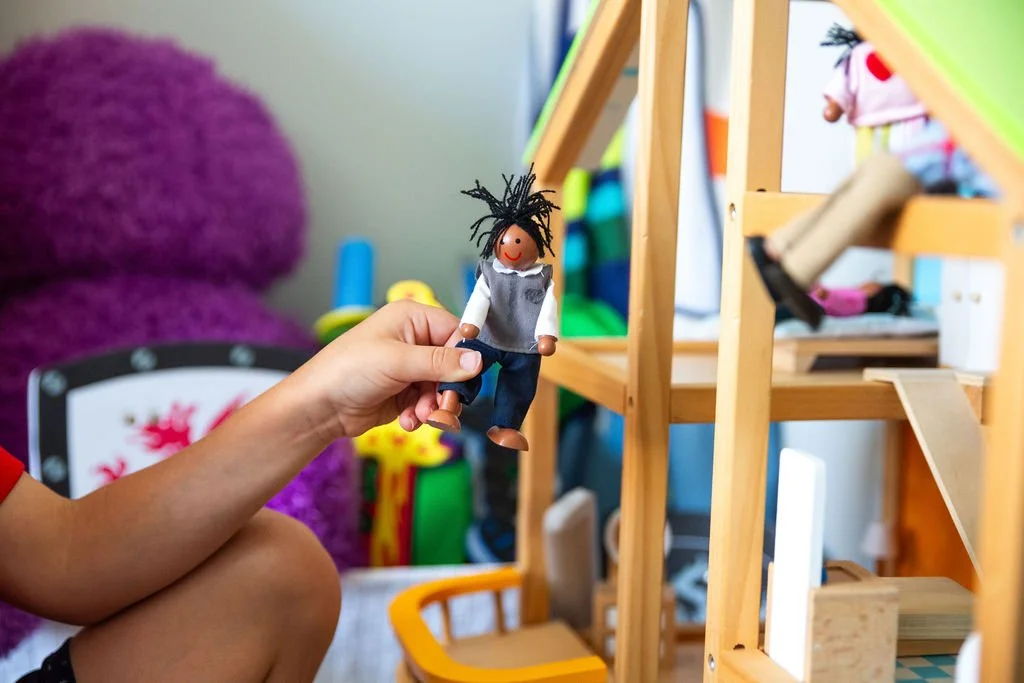
As child therapists, we often work with families who feel overwhelmed, exhausted, and unsure of what will actually help. One approach that can be especially effective for younger children is play therapy. Play therapy is considered a valuable tool and effective treatment for children with ADHD, offering a developmentally appropriate and non-invasive way to address symptoms. However, some major health organizations, such as the CDC, emphasize limited clinical evidence that play therapy directly improves core ADHD symptoms compared to parent-led behavioral training.
Let’s walk through what play therapy for ADHD looks like, how it helps, and what to expect.
Understanding ADHD in Children
ADHD is not just about “having too much energy” or “not paying attention.” ADHD is a neurodevelopmental disorder that affects how a child’s brain develops and functions.
Children with ADHD often experience symptoms such as:
Difficulty with impulse control
Challenges staying focused or following through on tasks
Emotional dysregulation (big reactions, quick frustration)
Trouble with transitions or changes in routine
At the core, many of these symptoms are tied to how a child’s brain processes information, regulates emotions, and responds to stimulation.
And here’s something important: Most children with ADHD are not choosing these behaviors.
They are often doing the best they can with the skills they currently have.
Why Play Therapy Works for Kids with ADHD
Children don’t naturally process emotions through conversation the way adults do.
They process through:
Play
Movement
Imagination
Experience
Play therapy is a therapeutic approach that meets children exactly where they are developmentally. It uses specific therapy techniques tailored to children with ADHD.
Instead of expecting a child to sit still and talk about their feelings (which can be especially hard for kids with ADHD), play therapy allows them to:
Express emotions in a natural way
Practice self-regulation skills
Build problem-solving abilities
Strengthen their sense of control and confidence
Develop executive functioning and self-regulation abilities
For many children with ADHD, play is the language that unlocks progress. Play therapy provides a supportive environment and a safe space for self-expression, allowing children to explore their emotions freely. It also teaches self-regulation through games that reward patience and strategic thinking.
What a Typical Play Therapy Session Looks Like
Every play therapist has their own style, but most sessions follow a similar structure designed to support your child’s unique needs. Therapy includes a mix of child-led play and gentle guidance, using techniques like role playing, games, art, and storytelling to help children express emotions, build skills, and work through challenges.
Rather than relying on conversation alone, play therapy allows children to show what they’re feeling. Through these activities, therapists support emotional regulation, problem-solving, and social skills in a way that feels natural and engaging. Throughout the session, the therapist observes, validates, and guides your child, helping them build confidence and practice new skills in real time.
Here’s what you can expect during a typical session:
1. Creating a Safe and Predictable Space
Children benefit from consistency, especially those with ADHD.
Sessions often begin with:
A familiar routine
Clear expectations
A calm, welcoming environment
The therapist creates a supportive environment and safe space where children feel secure to express themselves, allowing them to engage and explore freely.
2. Child-Led Play with Gentle Structure
In many sessions, the child is given choices:
Toys
Activities
Creative outlets
Dramatic play
Role playing
Games (including board games)
Sand tray
Art therapy
This might include:
Building
Drawing
Pretend play
Sensory activities
Creating scenes with miniature objects in sand tray therapy
Using creative materials like crayons and paint in art therapy
Puppet play and storytelling to provide safe outlets for complex emotions
Allowing children to have complete control over some activities is a technique that helps them develop decision making and impulse control. For example, in sand tray therapy, children create scenes with miniature objects to process emotions. Art therapy uses creative materials to support self-expression and emotional regulation. Puppet play and storytelling offer safe ways for children to express complex emotions they may not be able to verbalize. Therapeutic games are designed to teach attention, impulse control, and emotional regulation through engaging play.
While it may look like “just playing,” the therapist is intentionally:
Observing patterns
Supporting emotional expression
Gently guiding interactions
For children with ADHD, this balance of freedom and structure is key.
3. Practicing Regulation in Real Time
One of the biggest benefits of play therapy is that skills are practiced in the moment.
For example:
A child becomes frustrated → therapist helps them pause and regulate
A child struggles with turn-taking → therapist models and supports flexibility and patience through structured games
A child acts impulsively → therapist introduces alternatives and uses games with strict rules to teach them to pause, listen, and wait for signals, directly practicing self-control and better impulse control
In role-playing and group sessions, children practice reading social cues, resolving conflicts, and acting out real-life situations to learn cooperation, sharing, and communication
Instead of just talking about skills, children experience and practice them.
4. Parent Involvement and Support
This is one of the most important (and often overlooked) parts of therapy.
Parents play a critical role in the success of play therapy for ADHD.
Parents are not left out of the process. Parental involvement is crucial for maximizing the benefits of play therapy, as it helps reinforce positive behaviors at home and allows for tracking the child's progress throughout the intervention process. Positive reinforcement—such as modeling, praise, and creating structured routines—supports the child's behavioral progress during play therapy. By actively participating in their child's therapy journey, parents help build a strong foundation for lasting behavioral improvements.
You’ll receive:
Insight into your child’s behavior
Tools you can use at home
Guidance on how to respond in challenging moments
Because real change happens when therapy and home are aligned.
The Benefits of Play Therapy for ADHD
Play therapy is an effective treatment and valuable tool for treating ADHD symptoms in children. It can support children with ADHD in several meaningful ways: play therapy significantly reduces behavioral symptoms of ADHD, with effects often maintained over several months. Children with ADHD who participate in play therapy often display significant improvements in attention span, self-control, social behavior, and self-esteem.
Improved Emotional Regulation
Children learn how to:
Pause before reacting
Identify feelings
Manage frustration
Play therapy also helps reduce anxiety and supports overall mental health by teaching children emotional regulation skills.
Better Focus and Attention
Through structured play, children practice:
Sustained attention
Following through on activities
Completing tasks
Play therapy also enhances executive functioning, which leads to a greater ability to concentrate and make effective decisions in classroom and daily life settings.
Increased Confidence
When children feel successful and understood, their confidence grows. Play therapy helps children build self-esteem and self-control, which contribute to increased confidence.
This often leads to:
Less resistance
More cooperation
Improved behavior overall
Stronger Parent-Child Connection
As parents learn how to respond more effectively, relationships often become:
Less reactive
More connected
More enjoyable
Additionally, play therapy helps improve social skills by allowing children to practice turn-taking, sharing, and reading social cues during group or interactive play, which enhances their ability to form and maintain positive peer relationships.
The Limitations (What Play Therapy Doesn’t Do)
While play therapy can be incredibly helpful, it’s important to have realistic expectations. Play therapy is often combined with behavioral interventions and other treatments for ADHD, creating a comprehensive approach to managing symptoms and supporting emotional and behavioral growth.
It’s Not a Quick Fix
Progress takes time.
Children are building new skills, and that happens gradually—not overnight.
It May Need to Be Combined with Other Supports
Some children benefit from:
School accommodations
Behavioral strategies
Parent coaching
(In some cases) medication
Play therapy is often included as part of a comprehensive treatment plan for ADHD, which may also involve behavioral interventions and medication to address symptoms and improve emotional and behavioral functioning.
Therapy is one piece of the puzzle—not the only solution.
Not Every Approach Works for Every Child
Some children need more structure, while others need more flexibility.
That’s why finding the right therapist and approach matters. Selecting an experienced play therapist who understands your child's unique needs is crucial for effective play therapy for ADHD.
Is Play Therapy Right for Your Child?
Play therapy can be especially helpful if your child:
Is younger (typically under 10)
Struggles to express emotions verbally
Has difficulty with regulation or impulse control
Experiences frequent frustration or behavioral challenges
Play therapy is a therapeutic approach that uses specific play therapy techniques tailored to each child's developmental level and unique needs. These techniques are designed to help children with ADHD improve emotional regulation, focus, and social skills, often involving parental participation for the best outcomes.
It’s also a great fit for families who want:
Practical parenting support
A deeper understanding of their child
A relationship-based approach to behavior
A Gentle Reminder for Parents
If you’re parenting a child with ADHD, it can feel exhausting.
The constant redirection.
The emotional ups and downs.
The second-guessing.
But here’s what we want you to know: Your child is not “too much.” And you are not doing it wrong. They may just need support learning skills their brain doesn’t naturally default to yet.
Ready to learn more about play therapy for ADHD in Eden Prairie, MN?
We’d love to help you better understand your child and create a plan that actually works for your family.